

Carl Jung: “What is the myth you are living?”
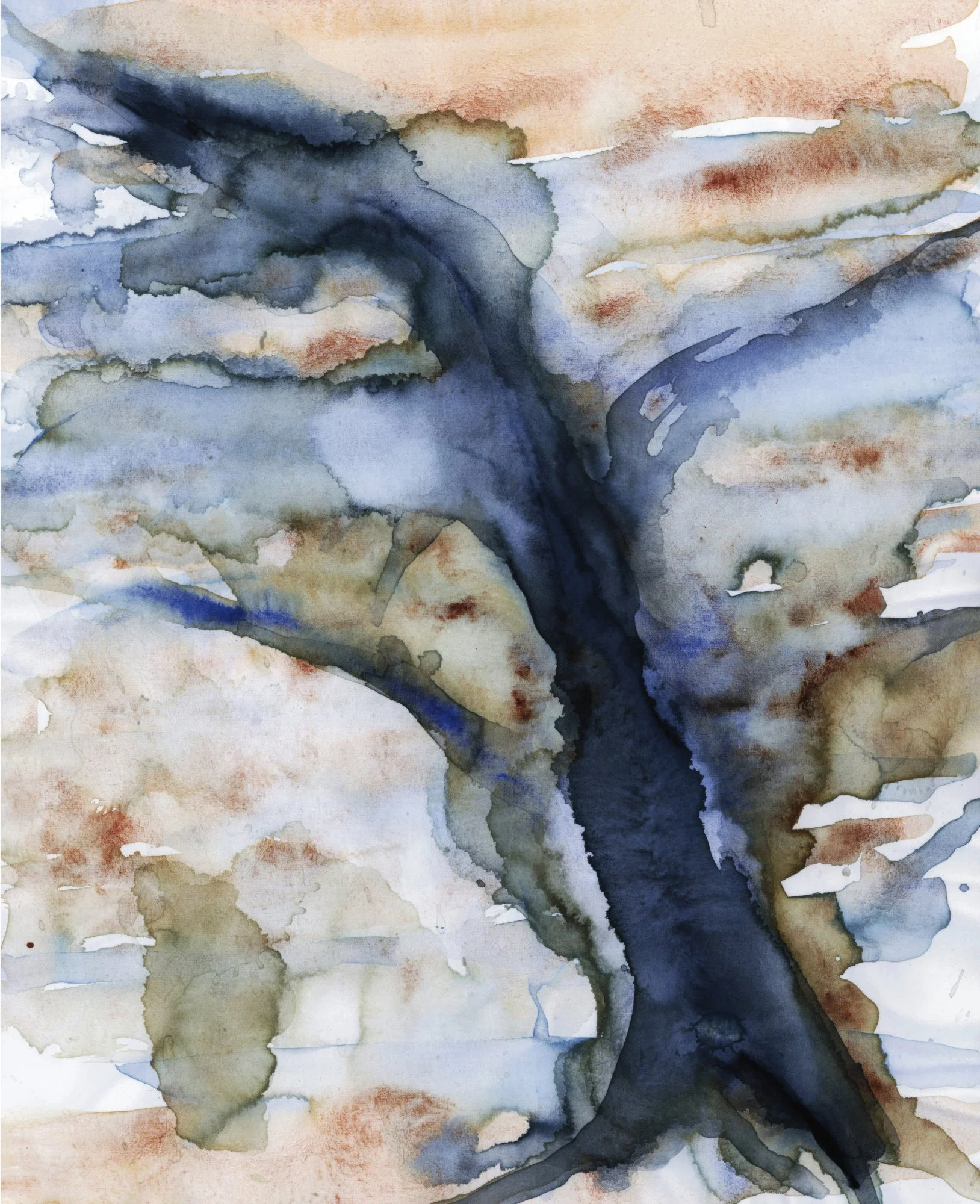
Hardly had I finished the manuscript when it struck me what it means to live with a myth, and what it means to live without one. Myth, says a Church Father, is 'what is believed always, everywhere, by everybody'; hence the man who thinks he can live without myth, or outside it, is an exception. He is like one uprooted, having no true link either with the past, or with the ancestral life which continues within him, or yet with contemporary human society. . .
So I suspected that myth had a meaning which I was sure to miss if I lived outside it in the haze of my own speculations. I was driven to ask myself in all seriousness: 'What is the myth you are living?' and found that I did not know. So, in the most natural way, I took it upon myself to get to know 'my' myth, and I regarded this as the task of tasks, for—so I told myself—how could I, when treating my patients, make due allowance for the personal factor, for my personal equation, which is yet so necessary for a knowledge of the other person, if I was unconscious of it? I simply had to know what unconscious or preconscious myth was forming me, from what rhizome I sprang.
- from Jung's foreword to the fourth (1950) edition of Symbols of Transformation, the heavily rewritten version of his 1912 book Psychology of the Unconscious. It appears in Collected Works volume 5, pages xxiv–xxv. He wrote it at age seventy-five, looking back at the book that had broken his tie with Freud, who had been his teacher and mentor and was the dominant figure in psychology at the time.
. . .
Many of us, me included, are guided by a myth, a deeply held story, that we don’t fully understand or perhaps understand at all. Nevertheless it guides our lives. It determines our potential to create the life we envision, and it can also limit that potential. The process of understanding our myth is one of writing out our life story with an emphasis on key events and patterns, including those associated with the flowering of that potential and those associated with recurring negative patterns. Writing out our story can help us understand the deep roots that make us who we are.
What is the myth you are living?
. . .
I posted the quote above and my reflection on it late on the evening of September 21, 2026. When I woke the next day it occurred to me that it represented perhaps the most challenging aspect of keeping a journal. I mean that in the sense that Hermann Hesse meant it when he said,
...every man is more than just himself; he also represents the unique, the very special and always significant and remarkable point at which the world's phenomena intersect, only once in this way and never again. That is why every man's story is important, eternal, sacred; that is why every man, as long as he lives and fulfills the will of nature, is wondrous, and worthy of every consideration. In each individual the spirit has become flesh, in each man the creation suffers, within each one a redeemer is nailed to the cross.
Few people nowadays know what man is. Many sense this ignorance and die the more easily because of it, the same way that I will die more easily once I have completed this story.
I do not consider myself less ignorant than most people. I have been and still am a seeker, but I have ceased to question stars and books; I have begun to listen to the teachings my blood whispers to me. My story is not a pleasant one; it is neither sweet nor harmonious, as invented stories are; it has the taste of nonsense and chaos, of madness and dreams — like the lives of all men who stop deceiving themselves.Each man's life represents the road toward himself, and attempt at such a road, the intimation of a path. No man has ever been entirely and completely himself. Yet each one strives to become that — one in an awkward, the other in a more intelligent way, each as best he can.
I realize today that nothing in the world is more distasteful to a man than to take the path that leads to himself.
- Hermann Hesse, Demian
Plumbing the depths of one’s life, exploring the contradictions, is hard, uncomfortable work. Many other approaches or aspects of journaling are more pleasant, more interesting. Focusing on what one feels gratitude for in one’s life, for example. Here are some notes I made in my own journal this morning thinking this all over:
Part of understanding our lives is understanding the myth guiding us without us knowing it. You discover that myth through the process of examining the contradictions.
Understanding the central beliefs on which you’ve based your life.
Understanding the difference between what you believe and how you actually live.
Understanding the difference between what you say and how you actually live.
Understanding the recurring patterns, both positive and negative, that have shaped your life. You do that by looking at the decisions you’ve made at key turning points in your life, and the reasoning behind them.
Getting down to the core truths underlying one’s life is an unpleasant task. The most unpleasant task in journaling. Maybe I shouldn’t have started there.
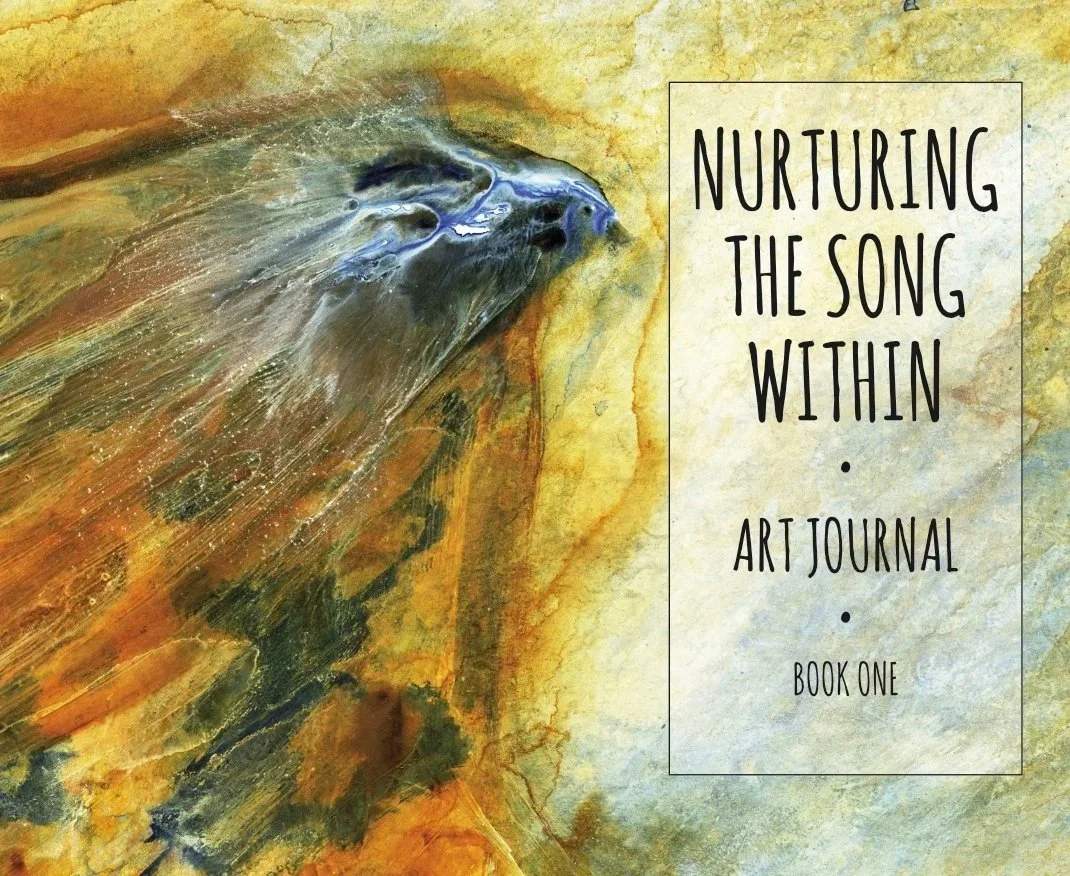
Nurturing The Song Within explores the inner work out of which creative work and a unique human life evolve. It contains key insights from hundreds of interviews author Roderick MacIver has conducted over the last thirty years of people who choose their own path in life, and persist through the challenges and setbacks to make their dreams real.
Those interviewed include artists, adventurers, activists, and people who devote their lives to serving others. The book explores the murky waters of deep imagination, friendship with one’s inner world, and how those inspire creativity. In the interviews, and through reflections on both those interviews and his own life, the author seeks to understand the hidden wellsprings that guide and provide the clarity and courage required to create a unique life. This is a book by someone who has done it –- who has been a fulltime working artist for thirty years. Over ninety of the author’s full color paintings accompany the reflections and interview excerpts in each volume of the two-book set.
A human life is an expression of ideas, of dreams, of courage and of discipline. Or the lack thereof. A life fully lived, a unique life, grows out of something deep – the essence of a human being. It evolves out of that which is sacred inside each of us. Its exact source is difficult to explain; it can however be sensed and understood.
There are still a few copies of the first edition of Nurturing the Song Within available. This is a premium art book with a Smyth-sewn lay flat binding printed on high quality art paper. Each two-page spread includes a painting and journal notes on living a creative, meaningful life.