

Hayduke Lives! The Man Who Helped Me Keep the Faith
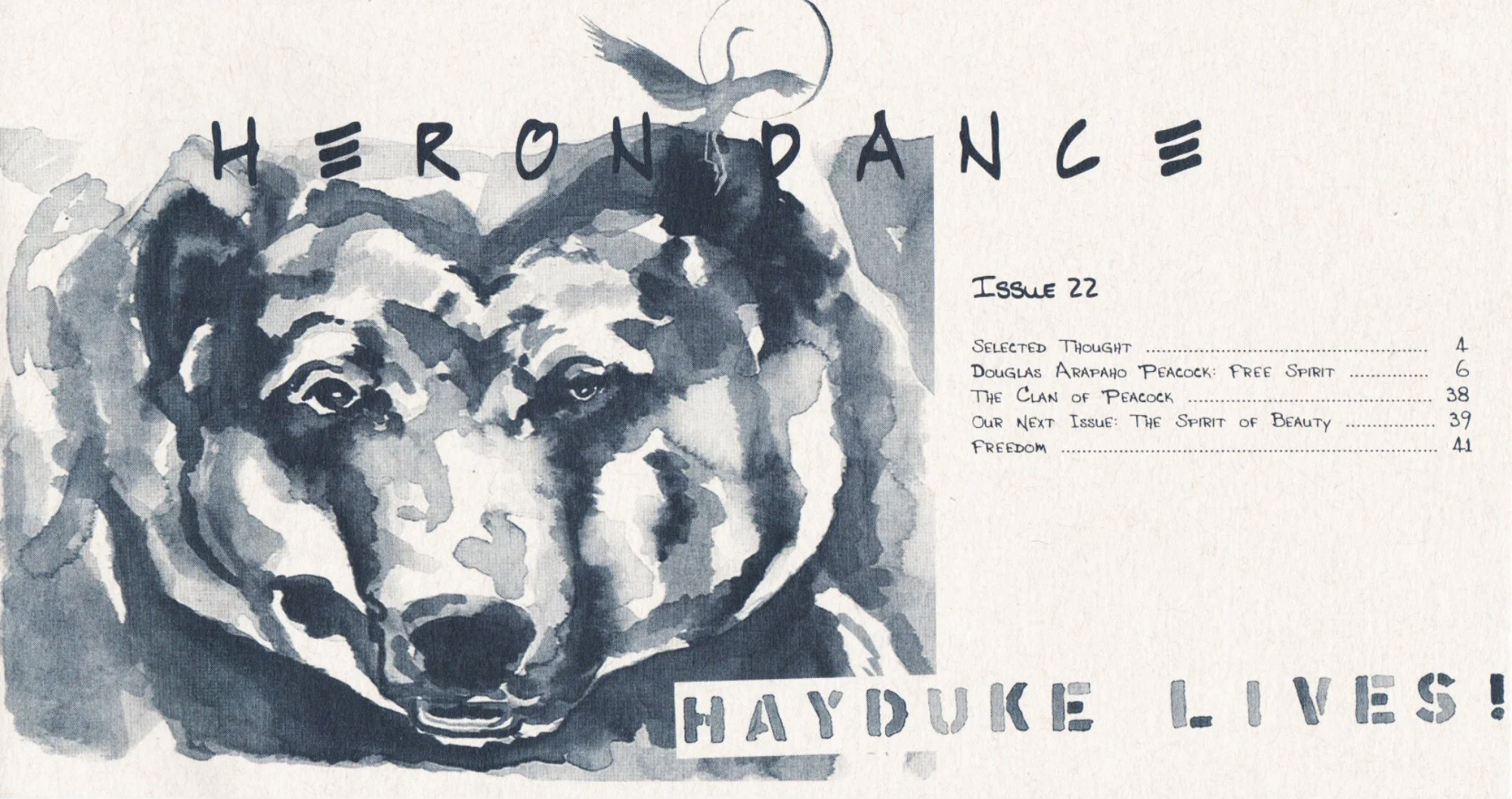
I first met Doug Peacock to interview him for a book. I was thirty-six years old. I arrived on his doorstep lost, discouraged and bewildered, working on a book no one believed in but me, married to a woman who expressed her ever-increasing dislike of me, with two young sons and a bank account that was shrinking with an alarming alacrity. And I was two hours late for the interview. It turned out to be one of the best nights of my life.
The afternoon before I had called my wife in upstate New York from an all-night truck stop in Arizona. No answer. I phoned several times over the next few hours. Still no answer. Concerned, at 10pm at night, I called a neighbor. She’s there, they told me. She’s got a friend with her. The friend shows up whenever you leave town. I asked if they would go over and ask her to answer the phone. They did. We had an unhappy phone conversation. His name was Wayne. I had left a career on Wall Street to write a book about people who lived life by their own rules, who marched to a different drummer, who dreamt a life, and then made it real. The literary agent I was working with told me that she had found a publisher if I would change the entire theme and central message of the book. I didn’t get to sleep until 4am and then slept till noon. Then I went for a run in a field of some kind of agribiz monoculture that stretched as far as the eye could see.
When I returned home a couple of weeks later, Wayne’s World hats were scattered around our home. Two months later I was diagnosed with an incurable cancer – non-Hodgkin’s Lymphoma. Stage IV. It was in my bone marrow. Our marriage broke up the day I was diagnosed. Eighteen months later, having not died and having not found a publisher, I started Heron Dance based on the interviews I had done for Free Spirits. In honor of the night he gave me courage, and maybe changed my life, four years later, in 1999, I devoted issue 22 of Heron Dance to Doug. That’s the only issue I’ve ever devoted to one person.
Heron Dance (now Zen Mountain Journal) was a magical journey. Not only did financial help show up when I needed it most, not only did encouragement show up when I needed it most, but also, through a strange series of circumstances, an experimental medicine (WF-10 or TCDO) developed in Germany showed up when I needed it most. It kept me alive until Rituxan was developed. But that’s another story. I offer this background to put in context why I showed up for my interview with Doug two hours late.
I found Doug chopping mesquite in his backyard on the edge of the desert outside Tucson. He was a little grouchy at first, but when I pulled out a six pack of dark German beer, his mood improved dramatically. It was a sunny January afternoon. We sat back there surrounded by clucking quail, who wanted us to move on so they could come in to feed. As afternoon became night, we sat in the dark and drank wine and then scotch. Coyotes howled in the hills around us and a pack of javelinas -- which look like small pigs with big incisors -- wandered into his back yard, snorting around the table. When we reached for a drink, or raised our voices, they would scramble off into the desert. A few minutes later they would be back, rooting around, a couple of feet from where we sat. As I said, it was a magical night.
I have met a half a dozen people in my life with a real passion for life. When you leave their company, you are on a high. They somehow give you a boost. Doug is one of them. I would like to share with you some of what he said to me that first day and evening that we met. I hope it doesn’t come across as hero worship. Doug's life isn’t all wonderful. There is anger, paranoia, fear; ever-present loaded handguns occasionally used indiscreetly, the drunken rambles through Tucson and Katmandu, the fist fights, the car wrecks, the friendships abandoned over some slight (real or imagined.) The bullshit and bad manners. There are some funny stories mixed up in all that, but they kind of miss the point. This man is alive. He offers a perspective on the importance of wilderness to a society that has removed itself from the natural world. He has truly lived. He knows profound sadness and joy. He lives with an open heart -- open to the beauty of nature, open to the beauty in the spirits of others. As we became friends over the ensuing years, I spent some of the best times of my life with him and some of the worst. He probably has more intuition about others and about bears than anyone I’ve ever met, and more wisdom – about everyone else but himself. About his own life he’s strangely unaware. But he came into my life when I desperately needed encouragement, and he gave it to me. His courageous approach to life, and his belief in me, gave me courage.
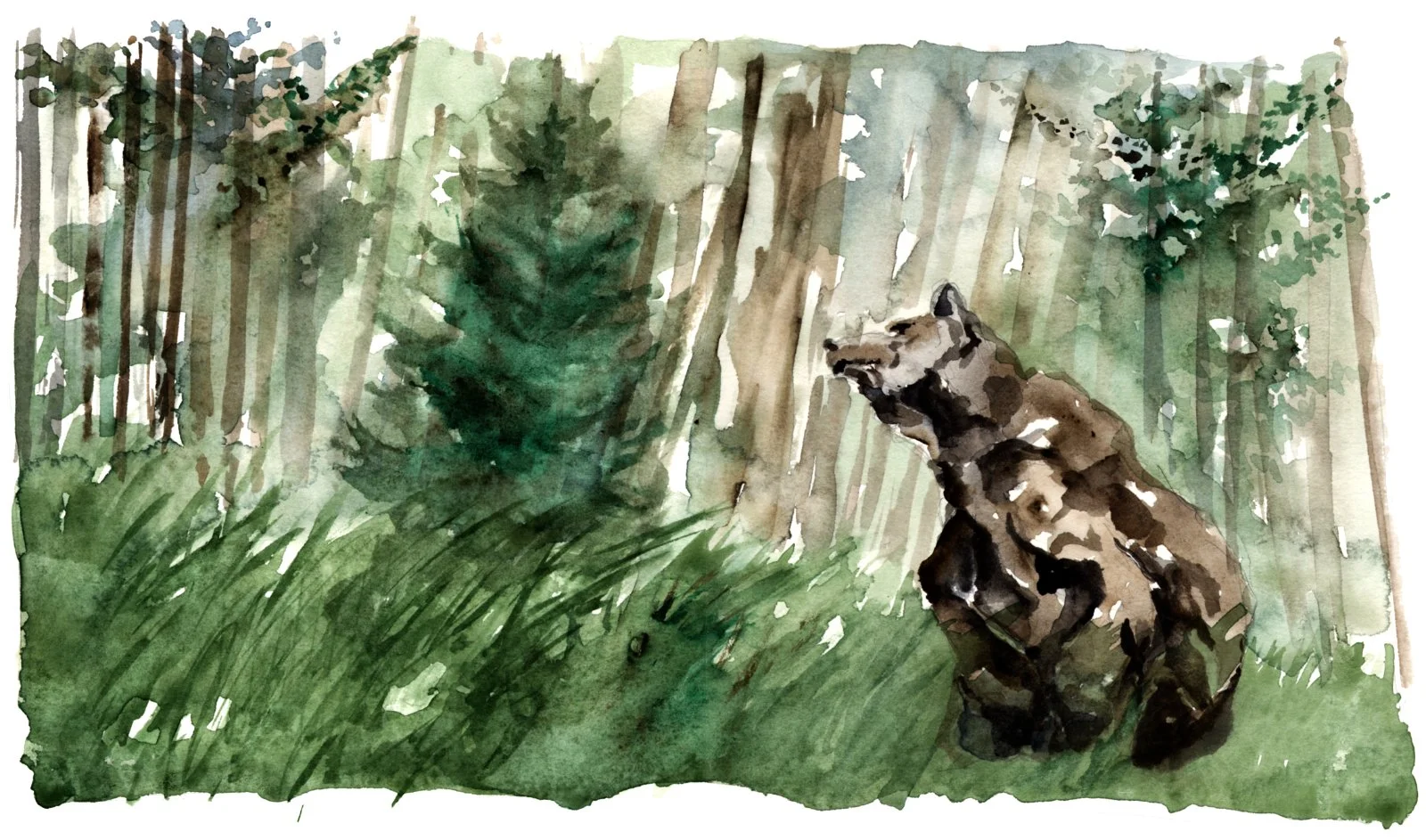
When we first met, I had no idea who Doug was. Yvon Chouinard, founder of Patagonia, had suggested a dozen people I might interview. Doug was one. As we sat in his backyard, I came to know his story. Doug is an ex-Green Beret medic who, after one and a half tours in Vietnam, had returned to America and spent time in Wyoming wilderness getting himself together, during which he developed an affinity for grizzly bears. His friend Ed Abbey got him interested in monkeywrenching -- eco-sabotage. Given his expertise in C-4 plastic explosive, he was a natural. (Just kidding). Edward Abbey wrote twenty books, mostly centered around uninhabited landscape. Perhaps his best known book is The Monkey Wrench Gang, about a group of environmental saboteurs who tried to slow the destruction of wilderness by rendering oil, mining and logging machinery permanently inoperable. A favored technique was dropping monkey wrenches down recently drilled oil wells, hence the title. A principal character in that book was ex-Green Beret Sergeant George Washington Hayduke, a character based on Doug. The last book Abbey wrote before he died was Hayduke Lives! In my gallery in Asheville there is a sign above the door: Hayduke Lives! And yes, yet he does.
Earth First! was inspired in part by The Monkey Wrench Gang. Doug did not ever actually join Earth First!, but the founders were friends of his, and many ex-Earth Firsters describe Doug as someone who inspired them in their work, both farious and nefarious. The FBI infiltrated Earth First! and arrested a number of key participants. The group split up. Many found less risky ways to work for wilderness.
Doug grew up in the woods around Saginaw, Michigan. His father left a job as a chief chemist in a sugar beet factory to become a Boy Scout leader. For seven years, while Doug was growing up, and his mother taught school, Doug was out in the woods with his dad. He was too young to be a Boy Scout, so he spent his time roaming around by himself -- bass fishing, canoeing, catching turtles.
He found a lot of Indian artifacts, including, at the age of fourteen, a major archeological site. His picture was on the front page of the local newspaper. "But just as I was riding the crest of my first wave, I fell from grace. I got drunk with three buddies, and shot fourteen pigs. We had to pay for every one of them. After the pigs I never quite made the Boy Scouts myself."
(Years later, sometime around 2000, I was hanging out at Doug’s place in Paradise Valley near Livingston – on Jeff Bridges’ ranch – and there was a guy there who had known Doug since they were both kids. He may have been one of the fellow pig shooters. I asked him how much of who Doug is was due to Vietnam. He told me that Doug was just as crazy as a kid as he was after Vietnam.)
After high school, Doug went to college for a while -- in order to avoid the draft -- but he hated school. After a few months each year, he would get in his jeep and head west to work in the copper mines or as a carpenter. Then he would have to hurry back to school to avoid the draft. Eventually they caught up with him and sent him off to MP school. "MP school was schizoid city. I had been an outlaw all my life. I would be watching the training films on stockade duty and dreaming of escaping over the wall myself. The only way to get out of something like that in the army is to volunteer for more and more serious, dangerous shit. So I volunteered for Airborne. Then I got interested Special Forces medical training. I have a need to be self-sufficient and I wanted that training. In one year, they teach you everything a doctor is taught with none of the bullshit. I was against the Vietnam War, but I had to see it for myself. What could be more perverted than going to experience the Vietnam War just to see what was going on?
"Anyway, I lived for a whole year looking at a road map of Wyoming, staring at the little blank spaces. This was before I went to Vietnam and had bullets to dodge and real things to worry about. I used to just stare at the map and take off like a bird. Soar like a bird above the peaks and the ranges and the glaciers and the basins."
He describes it as good training. Tough training. "Green Beret medicine is a counter-insurgent weapon. You go out there and patch up tribesmen, and fix up their kids, in the hopes of recruiting more and more guerrillas to fight your dirty little war. It's horrible." He spent a lot of time with Montagnards in mountainous jungle. He would be the only American, or one of two Americans in patrols of six to two dozen men. "They would helicopter us into a place surrounded by Viet Cong and NVA. We would sneak around in the woods, get in trouble and run for our lives… I have been shot at I do not know how many thousands of times. Not 20,000 but certainly more than 2,000. I had bullets go through canteens on my hips twice. I was only hit once… A lot of the bullets we dodged were from U.S. helicopter gunships. But being a Green Beret medic is an anarchist's military dream. You are totally on your own.
"I can remember being in really horrible places like the village next to My Lai about a month before it happened. At the time it was off-limits to Americans, but I smuggled myself in with my Vietnamese medic. We had become close friends, and we were walking around in this town together. You could just feel the animosity and hatred. There were a lot of Americans stationed at Duc Pho, which is very close by, but they were not allowed in.
"We were speaking Vietnamese and walking the streets. I really didn't want to be an American then at all. I was swimming in another stream. I was good enough by then that I could have a real conversation. After a couple of hours, I could feel the whole mood of the village change. I was not an American anymore. It was such a sensual pleasure -- speaking Vietnamese, walking into the stores -- just a very sensual pleasure. You could just feel the hatred evaporate.
"The last day I was in the field in Vietnam was March 16, 1968 -- the day of the My Lai massacre. I was forty miles away, back in the interior, behind a couple of mountain ranges… The war really had an impact on me. I was not immune to some of the horrific effects, but on the other hand it solidified all the doubt about where our culture and society is going. What I don't like about it. It turned out that most of my suspicions were right."
He got out of the army at the age of twenty five -- "a very old twenty-five." When he got back to the states he bought a jeep, went back to Michigan to see his parents for a few days. "I didn't have anything to say to anybody. I was aware of the impact I was making, but I couldn't help myself. I just wasn't there. These were the people I loved most in the world, and I didn't have anything to say. I didn't have anything to say to anybody. It was years before I could have a serious conversation with anybody." So he headed west. The mountains were in deep snow. He went to the Arizona desert and camped out in the canyons until June. Then he headed for the east side of the Wind River Range in Wyoming. "After a month, I got so sick of the rain, and eating trout and my own company that I decided to go up to Yellowstone where it was relatively flat and warm and dry. After I got there, I had a malaria attack, and ended up laying in a sleeping bag for three days. Soaked the sleeping bag all the way through. Temperature got up close to 106 degrees. Unloaded my pistol so I wouldn't do anything crazy."
He packed into a thermal area where there were hot springs to regain his health. He had a sow and her cubs saunter up to him. He scrambled up a tree. "It was stupid, but I didn't know any better in those days. Bleeding, naked in forty degree winds. She didn't pay any attention to me." That was when the park was trying to wean the bears from the garbage. He had accidentally camped right beside a dump. The bears would walk past -- fourteen grizzlies in a line. "Those were the days before more and more pigdom in Yellowstone. Before the crowds of people. There was almost no one there that time of year."
He had seen grizzlies before he went to Vietnam, but this time they made a real impact on him. He spent many summers filming them. He would camp out in Arizona in the winters, and then head back up to Yellowstone in the spring. "I have lived most of my life on the fringes of our culture. The most I have ever worked is four or five months -- as a hippy mailman. My whole life I have been totally unemployable. Whenever I make money, it is by accident. A total accident." His friend, Ed Abbey, suggested he consider a seasonal job with the forest service because: "It's got a quitting date that you can look forward to."
"So I would take these seasonal jobs. I worked in North Cascades as a backcountry ranger for three years. Objectively, from anyone's point of view, I was the worst park employee in their history. Horrible. Anarchists make lousy law-enforcement agents. The only thing I ever busted was an illegally parked Winnebago. I got in a fight with the deputy sheriff of Whatcom county and totaled a Ranger pick-up truck under highly dubious circumstances. I still hold the park record for property damage. So, with the support and encouragement of the Park Service, I left to find more suitable employment. That was twenty or so years ago. I am still looking, I guess. But apparently not too hard.
"I discovered that bears were having trouble, and I started sneaking into Yellowstone in April. I did that every spring. I would hide my tracks. Then I'd go from Yellowstone to Glacier in the fall. There are a lot more bears in Glacier. That became a seasonal pattern." Eventually he was working two and a half months a year and getting a little unemployment. Just enough to live off. That pattern went on for fifteen or twenty years. "I had a dog. I had girlfriends from time to time. They would come and go. Well, the dog wouldn't come and go -- but the girlfriends would. The dog socialized me, really."
He met Lisa, his then wife, in the back country hiking. They had two kids. By then he was in his forties, and had some need for a little income. He decided he should become a writer. "One thing you can do if you are unemployable is write. It doesn't involve collaboration and you don't have to raise funds or buy equipment. I thought about crime but, you know, you have to knock over a lot of Safeways these days to pay the rent. If there were honorable trains or banks, I'd take them. But there aren't."
For many years he lived a migratory lifestyle -- Yellowstone to Glacier National Park and then, around Christmas every year, he would go on a solo trek in the desert of southwest Arizona -- the Cabeza Prieta. When I interviewed him, he told me, "I have been going on the walk for seven winters -- roughly from Yuma to Ajo. A different route each time. It takes me a week or ten days to walk about 160 to 200 miles. I have a little cairn out there in the desert. A place where I mourn my dead. I spend a day there and fast." He has other memorials back in the woods in Yellowstone and Glacier. For twenty years he has been gathering buffalo skulls in Yellowstone -- animals from the same herd. He places them in a giant circle. He considers himself sort of a caretaker of their spirits. "I take my kids there now too. We make little offerings and things.
"I'm not out of the woods yet. I am the kind of person who does everything for therapy. I write for therapy, I walk for therapy. I cook for therapy. I pound nails for therapy. And every year I have to spend a lot of time out, by myself. I need great expanses of desert, tundra and wilderness. I travel constantly. My time is my own. I love new country. I love wild country most of all. I spend a lot of time in Mexico, a lot of time on the coast. A lot of time in Seri Indian country.
"A lot of my strength is really knowing what is unacceptable. And there is a whole lot that is really unacceptable. Most ways that people think they have to live -- I just could not do that. That's not an acceptable way. It's not acceptable to stand by and see something go on that is unjust. You would think you could let things slide after a time, but I just can't do that. It gets you in a little bit of trouble, but at the same time, you really know where you stand at all times. I don't preach to them, but I hope my kids see that."
The underlying theme of Doug's life is a passion for life, a reverence for life. Life of all forms. Wildlife, the way he spends his own life. The other is an uncompromising pursuit of what he believes to be right, regardless of the cost. Most of what he believes to be right is connected in some way to preserving wild areas as sanctuaries for wild things, and, secondarily, as places where people can go to get in touch with our original habitat.
"My habits are bad, like a hobbit. Drugs and booze are breaks for the soul. To be driven. Obsessive love, obsessive drinking -- it doesn't matter -- they are notions close to my heart. I pay attention to them. It gets me in a lot of trouble. I'm old now. Fifty. And not in great shape. Last year I broke eight ribs in fights. I don't look for trouble. These things just happen, but I can't walk away.”
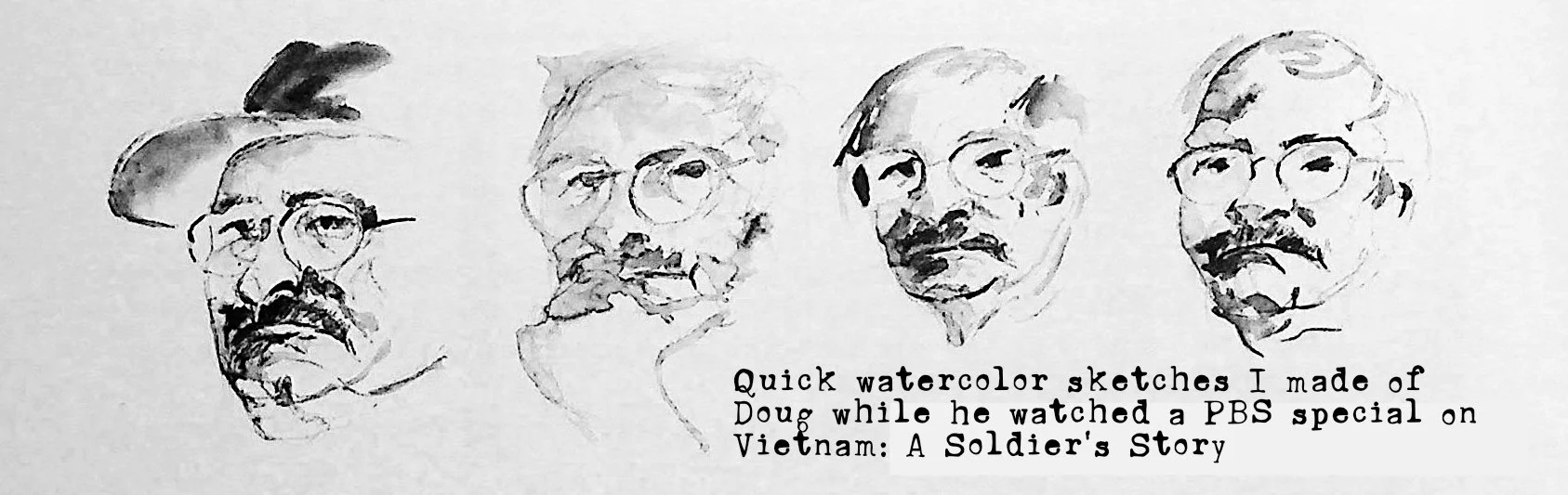
Here are some more excerpts from my interview of Doug:
I'm against TVs, but there is one in the house. Some days you get lazy. I take care of the kids for weeks at a time. When I have to get some writing done, I find myself just putting a tape in there and walking away. You probably shouldn't do that. But on the other hand, what is really exciting about children is not what you teach them, but what you share with them. More than anything else, I just share my life and my love for things in the out of doors. The way children see the world is the way you should see the world. It's like William Blake's Songs of Innocence. The smell of discovery around every bend, every meander of the creek, and all of your troubles disappearing, like bubbles down a sunny river. You can learn about that from kids and it's really wonderful. But you share it. You don't teach it. You don't dispatch it. You don't even borrow it.
I take my kids up in the canyon lands, exploring ruins that are virtually untouched. Or we go to the ocean and camp on the beach. We gather clams and oysters at low tide. We take a thirty-year-old drift boat and bottom fish and catch crabs and salmon. We make huge chowders. You learn about the world that way, and it's a good way to learn. You don't force anything. You get hungry and you go out and satisfy your hunger. Every day we go and get something to eat. I take tsampa, a bag of lemons, some condiments, but unless we score some fish or something we won't eat much. That is a real incentive. Diving for moonsnails. Catching trigger fish off the reef. Then returning to share the catch. I make a sauce with garlic and olive oil and some lemons. It's incredible. A feast night after night. And you learn things.
There hasn't been anyone some of these places for hundreds of years -- since the Indians disappeared. A lot of wisdom resides in that land, in the ruins and middens. What were the lives of those people like? Not bad, by all indications. They stored up food for lean times. And had lots of leisure -- lots of time to just enjoy life. Every day, all the clams you could eat, giant leatherback sea turtles. Desert cactus for vitamins. It's possible to go back and touch those roots -- our roots as human beings.You can still find the middens of the pre-historic Seri -- middens with thousands of broken moonsnail shells. We know they're good to eat because the Indians ate tons of them. That is such a great way for anyone to learn -- a kid, an adult, anybody. . .
“You find yourself by losing yourself. By not thinking about yourself all of the time. I love new country. Wild country most of all. I consider my time to be my own so I have travelled constantly. It's so important to get out of yourself and out of your culture because a lot about our culture isn't great. And you get outside yourself most easily in the wild. The places that are strange and different. It has to be different than your own life, your own culture. A place that is strange and new -- where what you know doesn't necessarily apply. You need to get out in order to see back in.
That's what I need to do when I am in a slump with my writing. I'll go and walk for a week. Walk and not see a human being. Or go for a walk through one of the few places on earth where the people still live as hunter/ gatherers....
"The notion of following your passion is a cheap instinct and a good instinct and it's worth indulging. Your passion is your source of power. In order to have power, you have to live a life of passion. You have to live a really full life. You need to follow those paths, no matter where they lead...in defiance of all things conventional, perhaps. And of course it is at a price. It's going to cost. You have to know that going in. But the price you pay, in my opinion, is not worth the time of day to think about. It is so important not to knee-pad around the world. You should never bow down to anything but those you love and respect. Ever. For anything."
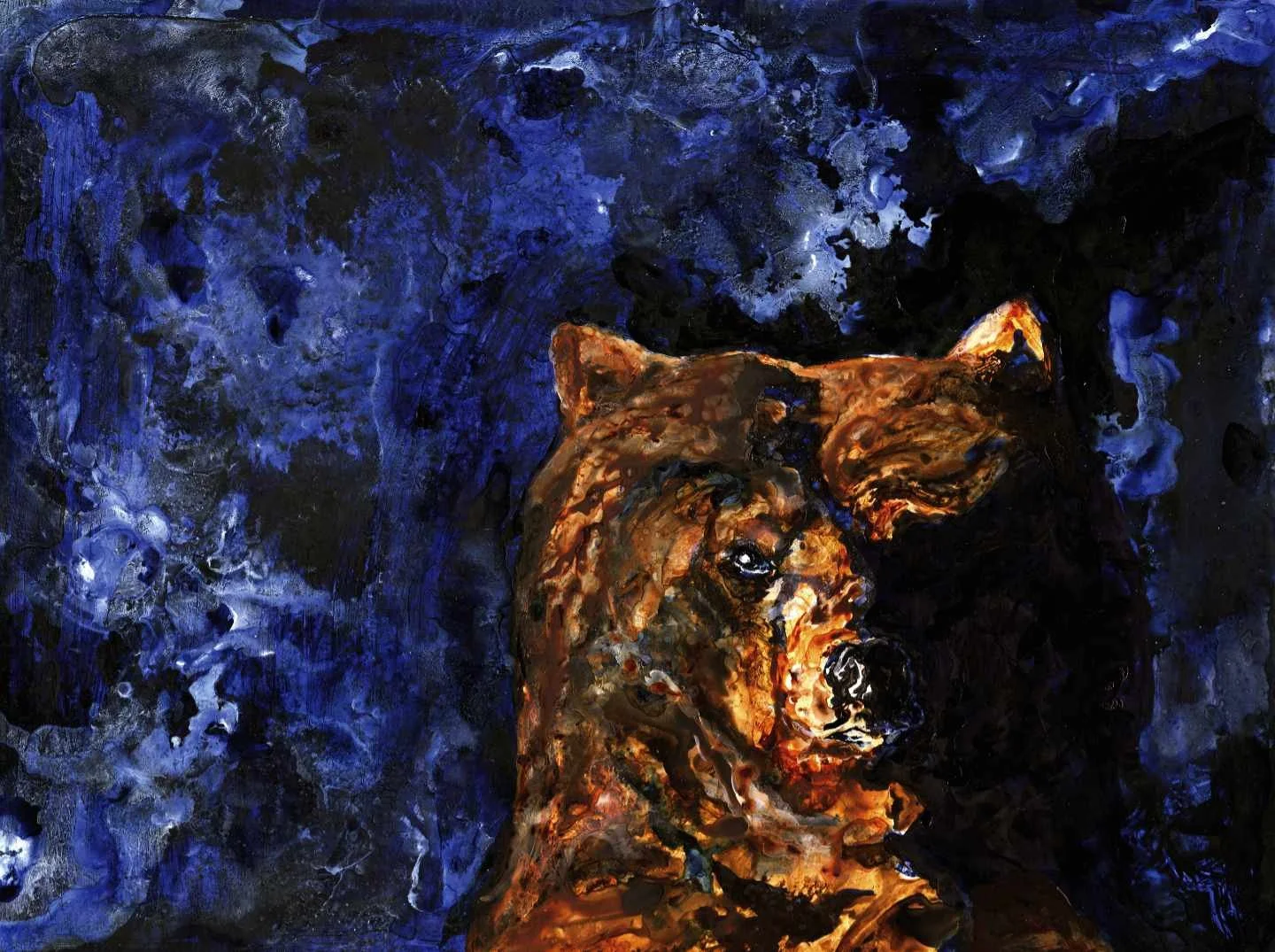
In 1999, I decided to take Heron Dance on an exploration of the subject of creativity. Doug's friends include a number of authors, poets and musicians. He gave me their names and numbers or addresses. During the trip, I interviewed some of them. They talked about their work, but what they really wanted to talk about was the impact Doug had had on their life. And so I decided to devote an entire issue of Heron Dance, the predecessor of Zen Mountain Journal, to Doug.
Here are some excerpts:
Doug comes down to visit driving some old Honda or Subaru. It leaks toxic fluid that ends up all over my driveway. He'll have to add a quart of oil when he gets here, but he'll miss the oil tank, so that will end up on the driveway too. As he is bumming a quart of oil from me, he'll tell me that I ought to get my Ford serviced. Meanwhile he is driving this piece of shit.
Then he will bring his black hole bag in and all of the sudden, every room of my house will be completely full of his stuff. He will decide he has to cook dinner. He can't cook dinner just for my wife and me. We need guests. So he'll get on the phone and all we'll have a dinner party for twelve. We'll go to the grocery store. I will buy a lot of groceries. We will go to the liquor store. I will buy all the liquor. And he will go buy a couple bottles of good wine. We'll go back and he'll cook. And he always somehow manages to get garlic on the bottom of his shoes and walk all over the house. There will be garlic all over my tile floors. Totally destroy the kitchen. People arrive. It will be the most extraordinary meal. The conversation will be incredible. You will wonder why all dinners can't be like that. You usually pick up the tab at dinner. And you feel wonderful about it.
- Dennis Sizemore
I have my own twisted view of karma. I believe it does come back. The intent of what you do is very, very important.
I refuse to call it God, but I believe it is larger than yourself. That's all I know. If it exists it resides in between. And indeed it seems to. In Vietnam I came to believe in arrowheads and invincibility and talismans. You believe in a lot of nonsense. But somehow, something works. I don't have any theories. I just believe in the Earth. I believe the wisdom resides on the Earth, in the Earth. If your intent is to serve the larger good, the Earth itself -- if you serve the Earth -- you serve yourself. Basically, you don't have to do this on a large level. You can just collect a lot of garbage from the side of the road. The sides of the roads of life, perhaps. That's power. That's karma. That's the best you can do.
And even if it's actuarial. Even if, perhaps, every good person doesn't get rewarded. Maybe some get hit by garbage trucks. Maybe some get hit by a hearse on the way to a funeral home on a motor cycle. Those are exceptions. I think, on the average, you can count on karma.
Except watch out for garbage trucks.
- Doug Peacock
In 1990, on my way to collect mesquite cooking wood in a sadly overgrazed valley east of the Picacho Mountains, I stumbled across a coyote caught in a number-3 trap connected to a chain leading to a re-bar grappling hook attached to a mesquite tree. I slowly approached and the coyote, naturally figuring I was his tormentor coming to kill him, charged violently and desperately, then dislocated his paw tugging back away from me. At ten feet I stopped and spoke in a low, calm voice to show I meant him no harm. After a few minutes -- with me not moving -- the young coyote ceased his futile lunges.
I moved in slowly, a half step at a time, talking to the coyote constantly, much like I talk to grizzly bears. It took me at least ten minutes to reach the trap. I knelt and reached out towards the trap with my bowie knife, trying to pry apart the steel jaws. The spring was too strong; I couldn't open the trap. The pathetic animal leaned away from me. I dropped the knife and moved forward. I took the trap in my hands. The coyote took a step towards me and sat down, one paw raised (caught in the trap that I now held) like my old collie dog used to do. I worked my fingers into the steel jaws and touched his mangled paw. I pulled against the spring and opened the trap. The wounded coyote -- sitting on his haunches, paw in the air, his nose only four inches from my own -- didn't move a muscle. I leaned slowly into his face and whispered "go." My little brother -— God's dog -— vanished into the creosote.
- Doug Peacock, The Patagonia Catalog.
Life goes by so fast. And it is so lovely. And it hurts so much. And in the end you get a chance to open your arms to death. An endless marriage of loving life. And wrapping your arms around death. Especially as you get older. Everything is so quick. I am devastated by loss. I have had loss all my life. I never catch up with it. You blink your eyes...you outlive a friend...you wonder what happened. You didn't live fully enough. You have to keep that in mind all the time. It is really easy to blow life. Blow life by not spending the kind of time you need to with your children, or with the other people you love. Being inattentive. Lazy. To live fully in each day is an onerous responsibility.
Life is so difficult and so easy at the same time.
- Doug Peacock
I am not a scotch drinker in general -- but last night I had a distinct nagging taste in the back of my head. It finally came to my tongue. And it was scotch.
The last time I had scotch I was with wild Indians in Siberia. They are Mongol natives -- hunters and trappers. I was traveling with Yvon Chouinard, Rick Ridgeway, Doug Tompkins, Jib Ellison and Tom Brokaw. We bribed an Aeroflot helicopter to drop us and our gear and kayaks at the head of a big river in Southeast Siberia. We land and are breaking out our tents and putting together our kayaks. At dusk these Udehe Mongols come over with a huge stew pot full of fresh moose meat -- liver and sirloin. It is just incredible. I love moose. Brokaw goes into his pack and brings out a bottle of Johnny Walker Black and pours shots for all of these Indians. So we shared dinner and scotch and watched the sun go down.
- Doug Peacock
I would not spend one minute on a cushion, inside a house, meditating, when I could look out, ponder a great valley of cottonwood and aspens and mountains beyond. I party, I drink, I swear, I fight. I am a poor candidate for a Zen life. And yet, there is nothing quite so total as being completely tuned into the present. To the moment. How you get it really doesn't matter.
Human beings are complicated. You can live in the past, you can dream all the time of the future, but every now and again you need to be right there. But it's hard because most of the modern world isn't worth paying attention to. Who wants to pay attention to the traffic jam on I-10? The more you live in the suburbs or urban areas, the more you want to shut everything down -- see little, hear little, smell nothing. Who wants it? Who needs it? The total sensory experience of living in a shithouse.
When you walked by a period of life when you could have been really happy, you should have seized it. You should have leaped upon it. I just try to let myself go. It's not necessary to live in the moment every day, in the traffic jam with smog creeping in your window, listening to bad rap music on the radio. But when it's there you have really got to live it. The best reason for living it is knowing you are going to die. It's no big deal. I have had some sense of my own mortality for a long time. It's not a negative thought. It's just the way things are. If you want more life, that's fine. But you should get as much out of the life that you have got left as you can. I wish I had a clue as to how to find happiness, but I know it slaps you in the face all of the time. You just have to stop long enough to pay attention.
- Doug Peacock

When we are on a long journey, one prone to setbacks and disappointment, we need kindred spirits to tell us we’re making a worthwhile contribution to their lives, to their well-being. As I mentioned when I first met Doug I was starting to wonder exactly how crazy I was to be chasing a dream of becoming an author. Doug’s message wasn’t Ra! Ra! It wasn’t “This book of yours is going to be great! It is going to be a great success!” It was if you tell your story with integrity and courage, it will find a market. Not a big market, but a market. You will make a living. Don’t worry about what anyone else says. What we need most as a culture is courage and integrity. If you don’t have that, go back to Wall Street. We don’t need you.
“You have to buy the groceries, but waiting for the confirmation that your work is worthwhile is utterly unimportant. You create this thing and you lay it out there. It's not yours anymore. Other people like it or hate it, but you can't worry about it. The only thing a writer should care about from a publisher is keeping his books in print. People can buy ‘em or not buy ‘em, read ‘em or not read ‘em. You have to do what you have to do. You can't let it affect your life in any way. You have to have a sense that it is the right thing to do, and if it is real important, believe me it will show.
“Anxiety – fuck it. You can't let money get to you. It's like people blackmailing you, or people that could black mail you. The more you worry about what people could do to you, the more they get to you. You should just not let it get you. The world is basically fucked. The people in People magazine – the people who write the garbage – make all of the money. But there is enough of a market out there that if you have something serious to say, you can buy your groceries. If you have something to say in a half-way intelligible way, not a slick way but an understandable way, you will buy your groceries, and you should not worry about any of that other garbage. Shouldn't give it a thought. If you need to waste some time on it, spend a whole afternoon on it all at once, and never think about it again.
“Just get your stuff out there. It doesn't matter who does it. Or how much money you get for now. If somebody wants to buy it, you will get the money back sooner or later.
“But you will never get rich doing this either. If you want to make money, you need to write a really sexy novel. A really glitzy story that will be sold for the movies.”
It was my plan, with the Free Spirits book, to keep myself out of it as much as possible. That was mostly because I thought what others had to say on what it means to live a big life, a meaningful life, was more interesting than my own thoughts. Doug disagreed. That was thirty-four years ago. I’m just now rethinking my writing around what he had to say – tell my story as I tell the stories of those I met that had an impact on me.
“You have to stick yourself in the middle of it all the time. You don't just start out with an introduction, and end with a conclusion. You are -- the way you interact with these people you are interviewing -- is as much of the story as any of their stuff is. It's the thread that carries it through. The way you see it all is the way the reader is going to see it all. We need to know all of the way through what you think.
“You can't render it through the tape recorder. You are going to offend some people. That doesn't matter. You are going to take a chance of being wrong. But that doesn't matter. You have to stick yourself in the middle of it. You have to arbitrate it. You are doing a really cosmic mix here. These people would not get along in a bar, or in a helicopter.
Years later I wrote in my journal:
Doug Peacock Helped Me Keep The Faith
Doug Peacock -- man with a soul
Man with a lot of friends
A good friend to have.
Doug Peacock -- ex-Green Beret
Man who knows death
Man with a hurt.
Doug Peacock -- desert rambler
Grizzly bear man
Revering the spirit -- the wild, past and present.
Doug Peacock -- man of passion
Following his passion
With conviction.
Hayduke.
He helped me keep the faith.
When I needed it most
A man without
the courage of his convictions
the courage of his values
is just another man
of which there are too many already.
What do I do
when doing right is uncomfortable?
How much security
do I get from my values?
From who I am?
Do I believe in who I am?
Do I believe when it is tough to believe?
Those are the measures of a human.
People pass through our lives. They sometimes give us an immense gift and then disappear over the horizon. That was what it was like with Doug and me. He gave me a huge boost when I needed it most. But there were lots of dark times too. The worst was a sea kayak trip with his son Colin in Baja Mexico. Doug and his wife broke up when Colin was about ten I think. Colin was probably fourteen on our trip to Mexico and really struggling. Doug had a lot of guilt about that and he took it out on me on the trip. Angry outbursts. Actions too hurtful to repeat here. We hugged as we said goodbye at the airport, but for twenty years after that trip Doug and I didn’t talk.
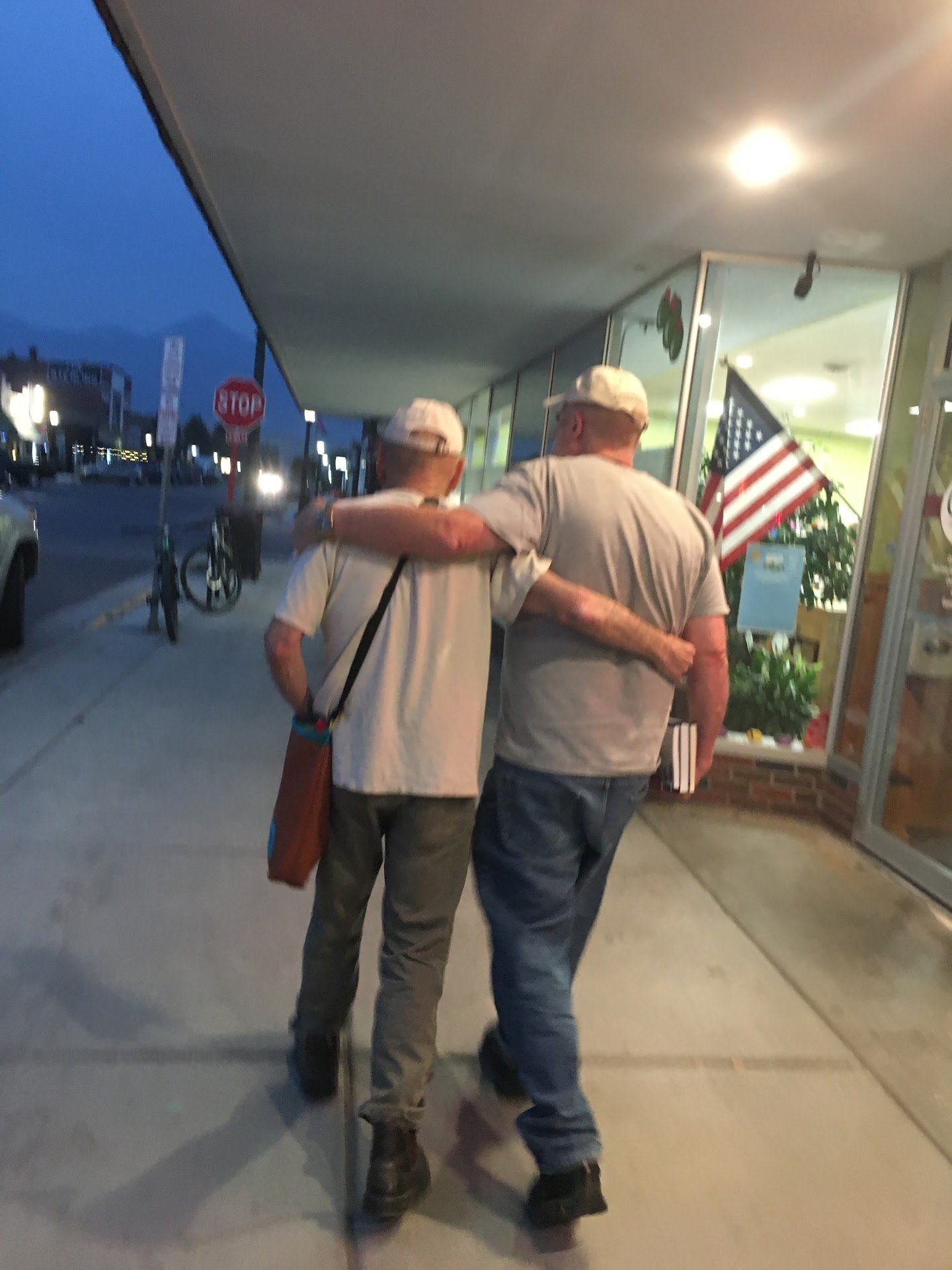
Then a couple of years ago I went to Montana to show a friend Glacier National Park and look for grizzly bears. Doug lives outside of Livingston Montana so I contacted him, and took him and his wife out for dinner. Below, a photograph of him and me walking down the street afterwards. The three books I was carrying are his latest three.
I told him that when we first met he told me that he had one foot in the grave. He responded, “Yes, but now it is actually true.” I said to him that we’d probably never meet again but I wanted him to know what a profoundly positive impact he had had on my life.
Doug has written several published books: The Grizzly Years, Baja!, Was It Worth It?, In the Shadow of the Sabertooth, Walking it Off, In the Presence of Grizzlies, and The Essential Grizzly as well as a number of articles for Men's Journal, Outside, Amicus Journal, Audubon and others. All of his books are available on Amazon.
Three Doug Peacock pages on the Zen Mountain Journal website.