
Ikkyū and the unselfconscious rhythm of life

Mirror of the Moon II
The Fisherman’s Song
Studying Zen, focused
sitting meditation, reaching
for enlightenment
clouds the clear mind.
Meanwhile a lone fisherman
hums a simple song to a darkening river.
Rain softens the dusk,
moonlight slips through clouds
—nothing to explain,
the river sings itself into night.
- Ikkyū (Japanese Zen monk, 1394-1481), Heron Dance interpretation.
Ikkyū’s poem about the fisherman distills his entire philosophy: truth arises not in monasteries or books, but in the unselfconscious rhythm of life. The fisherman, singing through dusk and rain, represents the purity of mind that comes when one forgets striving—including striving for enlightenment. The best way to know is simply to be, living in a way that your life sings itself.
Ikkyū Sōjun
Early life
Ikkyū Sōjun (一休宗純) lived one of the most remarkable and unconventional lives in all of Zen history— unorthodox, deeply human, and inseparable from nature.
Born near Kyoto during Japan’s turbulent Muromachi period, Ikkyū was likely of noble birth—his mother an imperial concubine and his father perhaps Emperor Go-Komatsu, though this was never acknowledged. Because of court politics, he was separated from his mother and sent to train at Ankoku-ji, a Zen monastery, at the age of five.
From the beginning, he was more intuitive than obedient. He grasped Zen’s essence early, but recoiled from its rigid institutionalism and rote rituals.
Training and enlightenment
As a young monk, Ikkyū studied under the respected master Kaso Sōdon. He spent long periods alone, meditating beside ponds, rivers, and forests around Kyoto. According to legend, his enlightenment came not through formal practice but when he heard the cry of a crow at dawn—a sound that split through his delusion.
He took the name Ikkyū, meaning “One Pause” or “One Rest,” a reflection of his belief that awakening can occur in a single, unguarded instant.
The “Crazy Cloud” years
Ikkyū called himself Kyōun—“Crazy Cloud.” The name reflected his refusal to separate the sacred from the profane. He drank wine, visited teahouses and brothels, and loved the company of artists, poets, and commoners. His poems overflow with nature, sensuality, humor, and compassion.
He taught that enlightenment is not found in denial of the world but in immersion within it—living fully without attachment. For this he became a cultural hero: a monk who laughed at monks, a sage who celebrated life’s earthy details.
Later life and legacy
In old age, Ikkyū was unexpectedly appointed abbot of Daitoku-ji, one of Kyoto’s great Zen temples, to restore order after years of decline. He accepted reluctantly, reviving Zen’s original spirit of direct experience over hollow ritual. He continued to write poetry and calligraphy until his death at eighty-seven.
Ikkyū’s Kyōun-shū (“Crazy Cloud Anthology”) endures as a collection of hundreds of poems that embrace the full range of human experience—erotic, serene, satirical, and profoundly spiritual. His work influenced Japanese arts from haiku and the tea ceremony to the philosophy of wabi-sabi and modern Zen thought.
. . .
As often happens, the morning after finishing The Mirror of the Moon, I saw the painting in a whole new way, and created this new version, The Mirror of the Moon II.
. . .
If this work resonates with you, please support it. Heron Dance and Zen Mountain Journal survive on the kindness of strangers. Please make a contribution here.
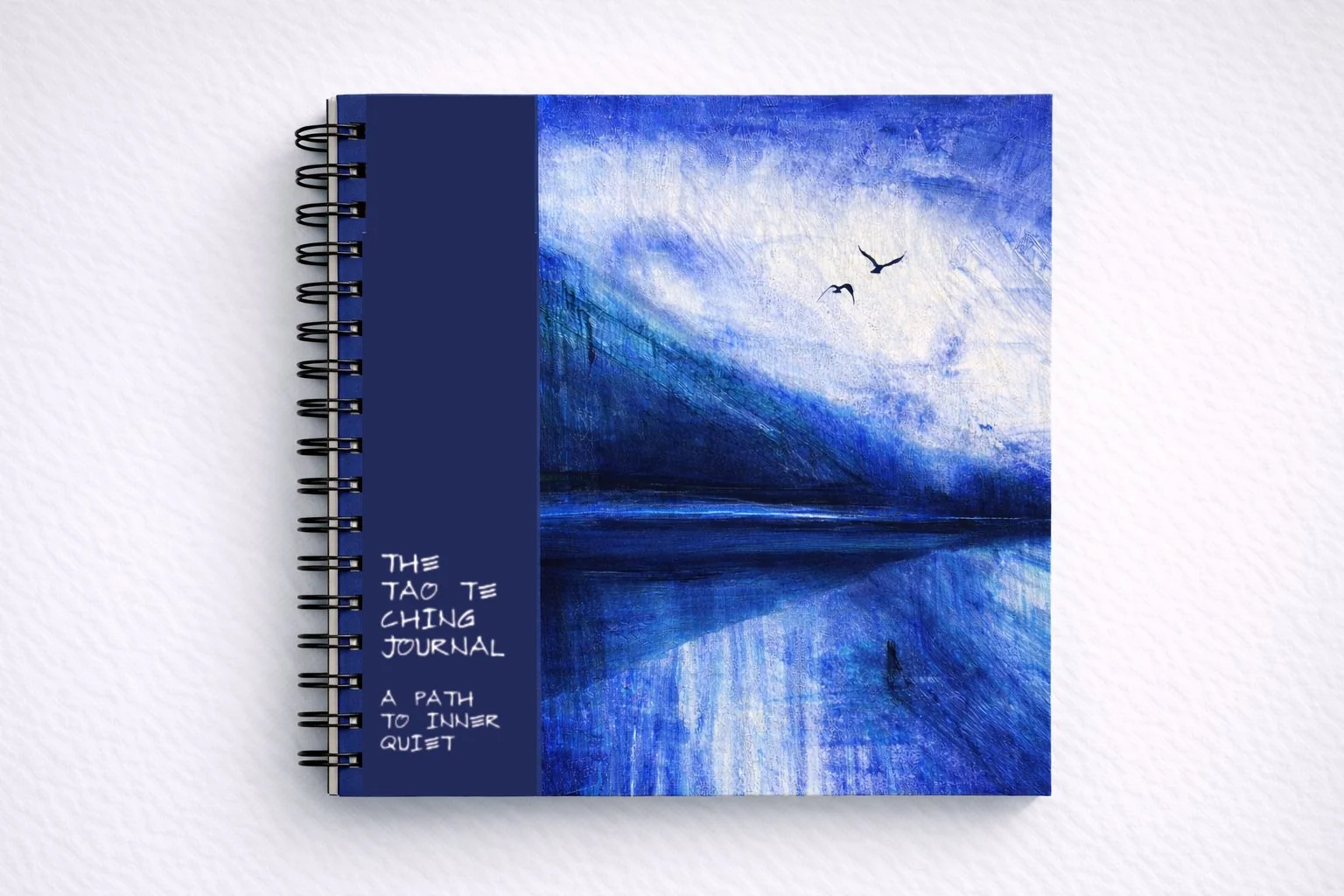
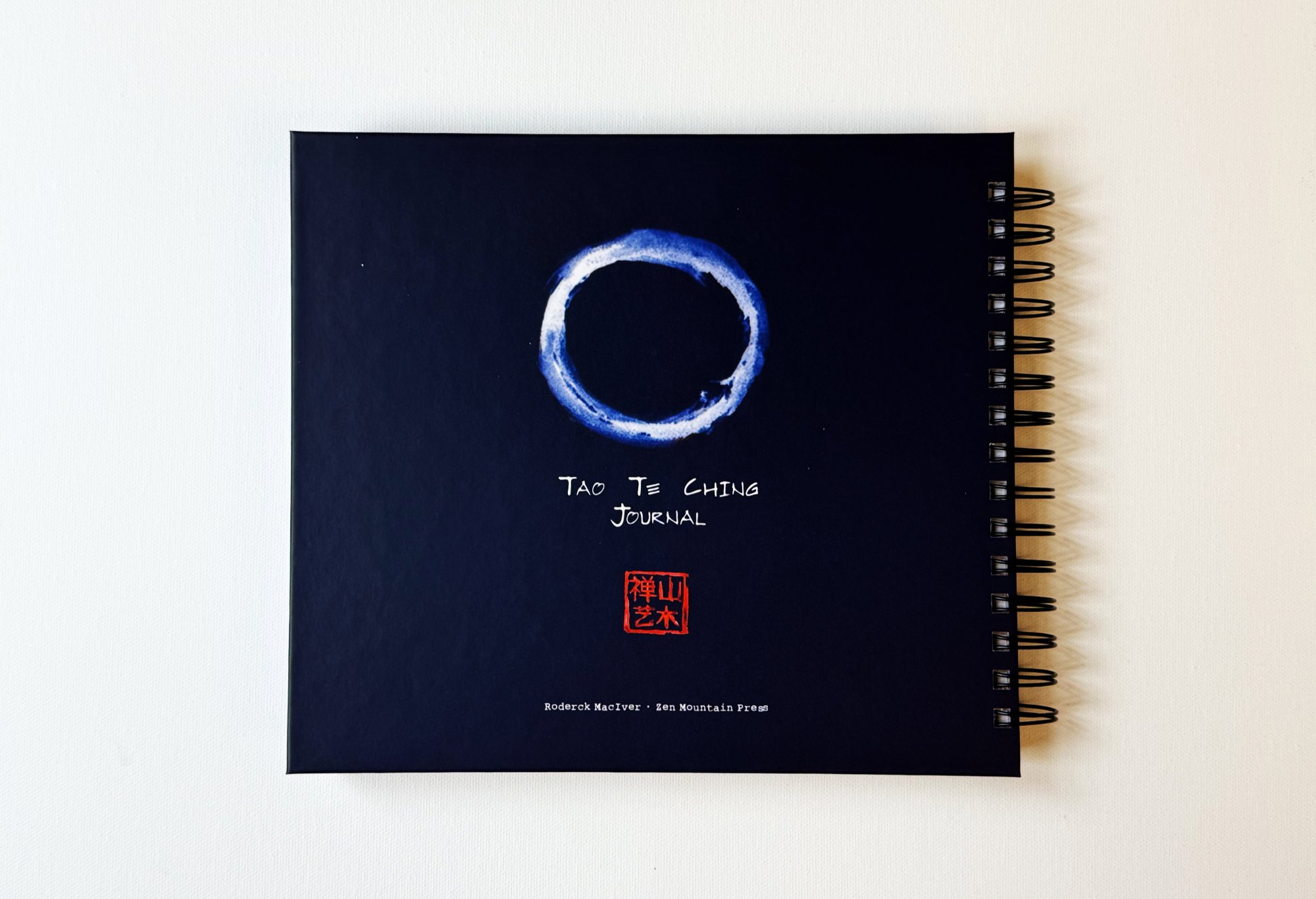
The Tao Te Ching Journal: A Path To Inner Quiet
Zen Mountain Journal blends Taoist hermit poetry, contemplative art, and reflections drawn from a lifetime shaped by wilderness, solitude, and decades doing creative work on the outer boundaries of our culture. These journals are companions for seekers — guides in the reconnection with inner quiet, beauty, and the “soundless music” of a life lived with simplicity and meaning.
• Size: 9.25 × 8.5 inches — convenient size for desk or lap.
• Hardcover — the book can be written in without a table or desk.
• Double wire-o bound to lay flat.
• Printed on Mohawk Superfine, a premium uncoated paper for a beautiful writing surface.
• 160 pages.