

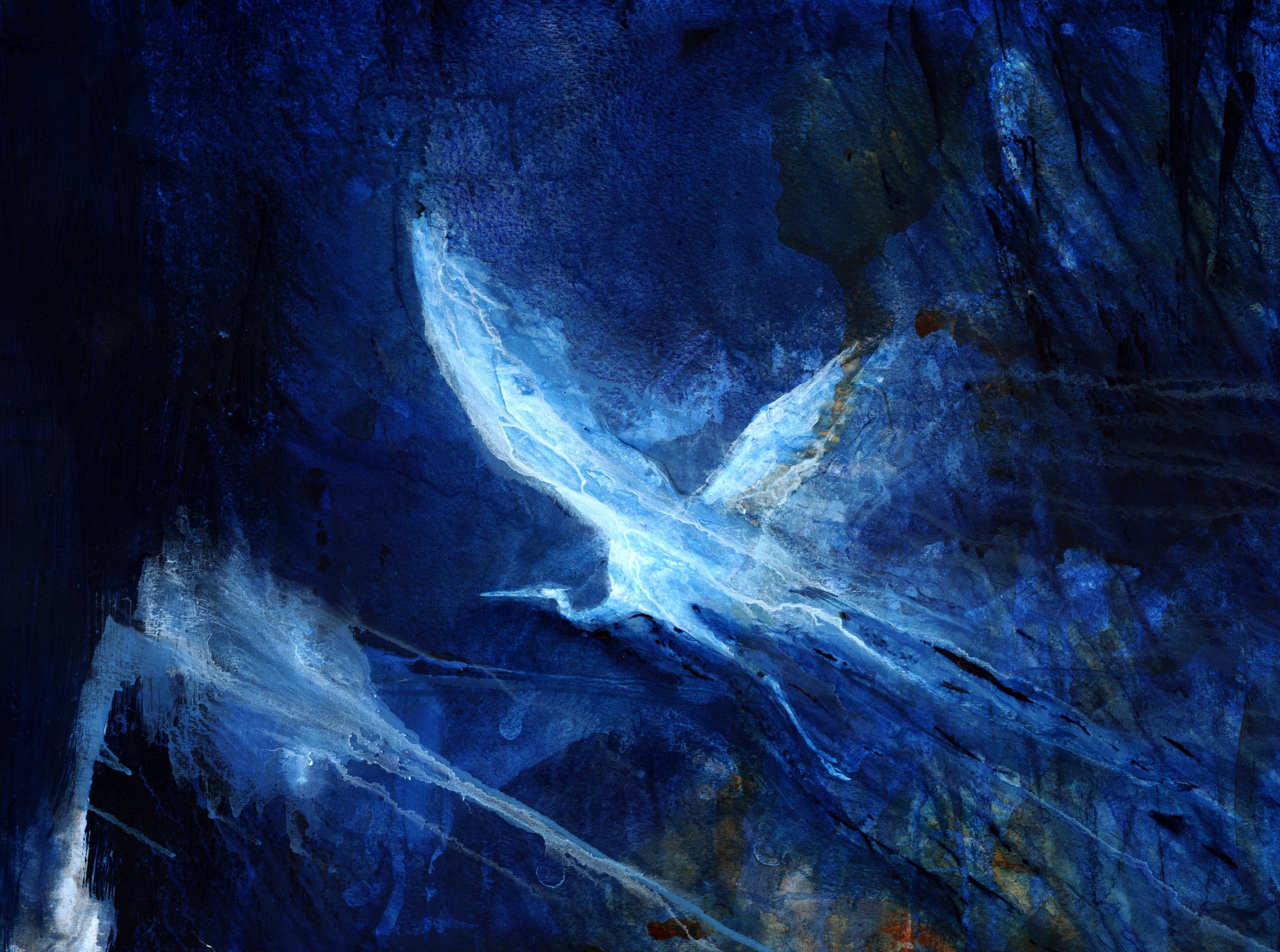
The outer journey is a manifestation of the inner journey.
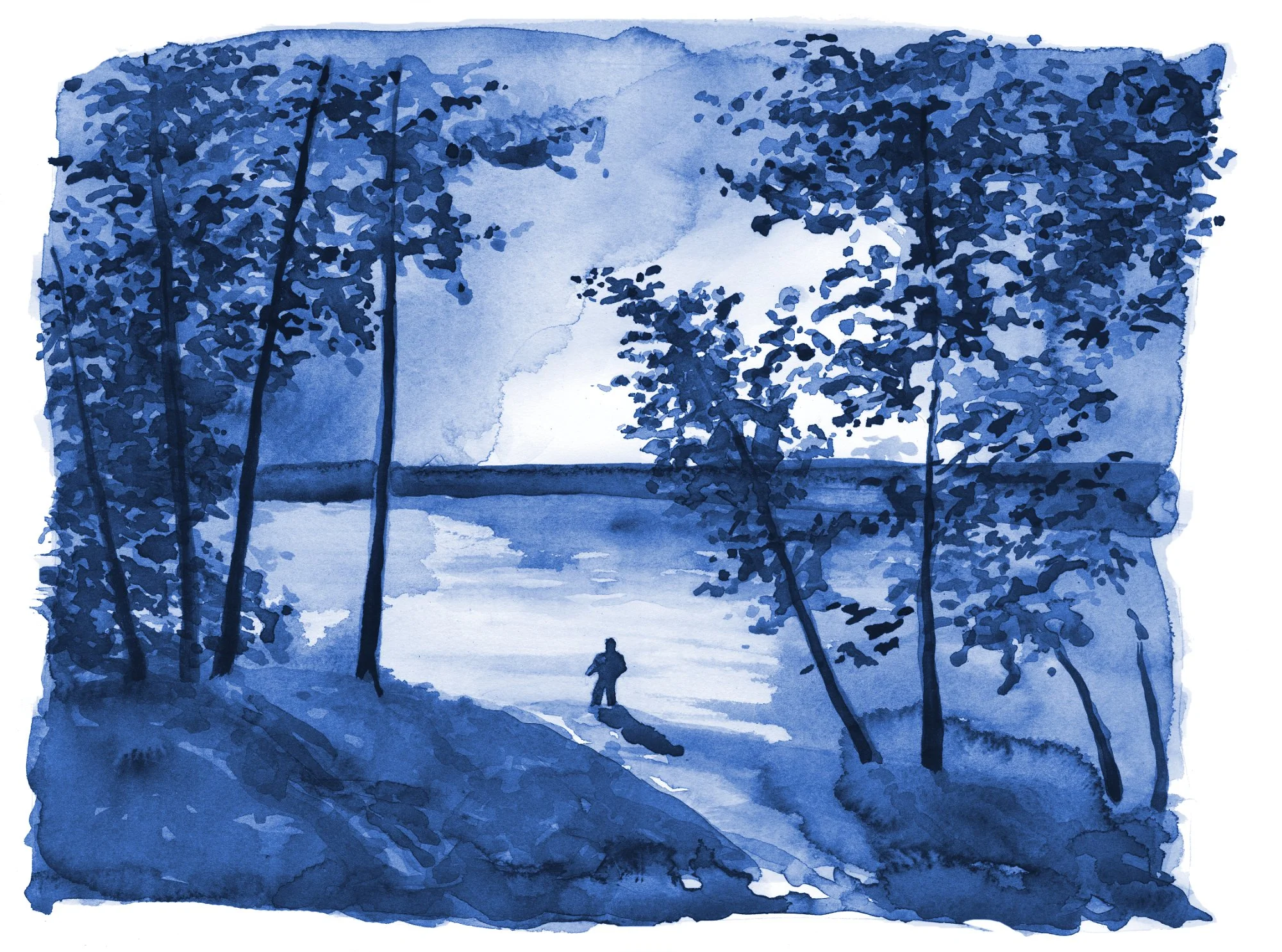
I was out for dinner the other evening with an old friend visiting from Charlottesville, and somehow a conversation got going between him and our server about how he and I met. "Before I met Rod," he said, "I read his publication Heron Dance for years. It got me through some tough times. It gave me the courage to make the changes in my life that I needed to make."
I've been turning that conversation over in my mind in the days since. I try to listen carefully when friends and readers tell me what they get from this work. It is better to know what I actually contribute than it is to know what I think I contribute. And, when I thought about it, I realized that I've received thousands of emails and letters over the years from readers saying essentially the same thing — that this work helped them through a difficult time, and that the stories I tell, about my own life or the lives of others, gave them the courage to do what they needed to do. Listening is important, even when it isn’t exactly what I’d like to hear. To many readers ancient Taoist hermit poetry is a tool, one tool of several, not the endpoint.
Taoism and Zen, in particular the ancient roots of those spiritual traditions, resonate deeply with me from my own time alone living in a cabin way back in the woods. The poems of the mountain hermits of old embody a deep peace similar to what I’ve experienced living that life. Their poetry is about connection with nature and with interior realms, and building a life out of that. And about sacrificing for it — nothing sacred happens without sacrifice. Zen and Taoist poetry will always have a central place in my work and in my life. They bring me back in touch with the stillpoint out of which my life and creativity evolve. Others I know find it in other places. In the end, it doesn’t matter where or how we find it.
What matters is that creative work, and a life, grow out of a stillpoint. Without quiet reflection at the center, a life spent moving from project to project, from adventure to adventure, can lack focus, a purpose and even spin out of control. The particular practice or spiritual tradition probably doesn’t matter. The stillpoint can be found in a hammock listening to birdsong. It can be found by laying in bed in the morning daydreaming. I don’t think it really matters.
Except for the point, the still point,
There would be no dance,
And there is only the dance.
— T.S. Eliot
Or as Chuang Tzu wrote in the fourth century BCE, as rendered by Thomas Merton — a hermit monk of another kind:
Emptiness, stillness, tranquillity, tastelessness,
Silence, non-action: this is the level of heaven and earth.
From the sage's emptiness, stillness arises;
From stillness, action.
The heart of this work is the nurturing of a friendship with yourself.
This week, as I thought this over, I wondered if though I may think that my contribution to the lives of others is my interpretation of this mysterious and beautiful ancient poetry, my readers may have a completely different idea. I need to listen to what readers think.
And if I've helped people at turning points, the questions are how, and why. What have I learned from the turning points of my own life? From leaving home at fifteen to hitchhike across the country, and a year later from living deep in subarctic wilderness with Dene people who spoke no English? From all the other choices, many of them incongruous with who I am and what I want — starting a business in my twenties doing pre-offer due diligence for corporate acquirers on Wall Street; amateur boxing in my twenties; whitewater kayaking in my fifties; a romantic life that has involved more than a few unpredictable women who were themselves chasing the next adventure, the next thrill? They were exciting to be around, but a source of peace they were not.
When I meditate and journal on those decisions, the question that keeps surfacing is how much of it was an effort to avoid a confrontation with myself. Did I embark on adventure after adventure in order to avoid exploring my interior world and understanding myself and thinking through where in my then short life I had actually found peace. Slowing down and looking inside can lead to questions we’d rather avoid and confronting patterns of our lives that are uncomfortable.
Our lives are, to a large extent, spent avoiding confrontation with ourselves. When you realize that, you can begin to make sense of the enormous amount of our culture's daily activity, which attempt to distract us from ourselves, from deep reflection, from existential confrontation.
- Roger Walsh, in The Search for Meaning by Phillip L. Berman
This is something the old hermit-poets understood. Ryokan, Han Shan, Chuang Tzu — they didn't go looking for the exciting edge in life where unpredictable things happen. They were drawn instead to the stillness most people spend their lives avoiding. They found that a way of seeing was waiting there too, just without the spectacle. The outer edges of inner landscapes are also where the enclosure thins. It is quieter there, and you come back without a photograph to show for it. The story you have to tell will be difficult for others to understand. That’s probably why the territory isn’t crowded.
I salute the skill and courage it takes to run a class four rapid, but now I’m more interested in the other kind: the courage to sit alone in a room and confront oneself, confront the patterns that underlie a life, both helpful and unhelpful.
Before Heron Dance was Heron Dance, it was a book that couldn’t find a publisher — Free Spirits. It grew out of interviews with people who had arrived at their own unique vision of what they wanted from life and then built an existence around that self-knowledge, living by values often at odds with those of the dominant culture. They made films about living simply in nature, and about generosity as a source of happiness. They volunteered in refugee camps, or nursed injured raptors back to the wild, or worked in the inner city with the addicted. Some were peace activists who had spent serious time in prison for nonviolent civil disobedience. They sailed with Thor Heyerdahl, climbed the world's mountains, or paddled the Amazon upstream to its source. From there, Heron Dance went on to explore the human connection to the natural world, creativity, and gratitude as a spiritual practice and a philosophy of life.
From Outer Adventures to Inner Stillness
Reflecting now, approaching seventy, I consider how to integrate all of it — the adventures and misadventures, the learning and mistakes, the triumphs and failures — and offer what I’ve learned about how our inner journey shapes our lives in the world. If readers tell me that I’ve helped them at times of turmoil and loss or at major crossroads in their lives, I want to offer what I’ve learned about that. I know a little about the search for the wisdom a major new direction requires, about the search for the kind of insight that can only come from deep within, and the courage needed to take a direction in life where the outcome is uncertain.
For me, the quiet strength of a life lived on its own terms comes from meditation, walks in the woods and the study of the ancient roots of Taoism and Zen. Not the retreat centers, not the sanghas, not the chanting of the temples — but the simplicity of life built around a friendship with oneself. I respect every spiritual tradition, but I am a solo practitioner whose temple is the woods. The simplicity of Zen attracts me – the search for the essence of the thing, of life, even while acknowledging that it probably can’t be found. And the surrender of Taoism. Surrender is what I most need to learn in life, not what I’ve mastered.
And then creating a life, a unique life, a unique work, out of that inner work. What does Zen look like, lived? What can be made of a life out of a friendship, carefully tended, with the soundless music within?
The journeys of our lives, our journeys out in the world, are a manifestation of our inner journey, our inner life.
Zen Buddhism resulted from the encounter between Buddhism from India and Taoism from northern China. Poetry was an important part of the tradition of the Taoist hermit monks of the Zhongnan Mountains. The Tao Te Ching is the best known of those poems but there were thousands of others written over two thousand years ago. Many are as beautiful and mysterious as the Tao.
Zen Mountain Journal also draws from the poetry of the Zen Buddhist monks of old Japan.
Zen Mountain Journal offers a Taoist journaling practice for those who seek to connect with inner worlds, with the deep silence and peace within. The poems and paintings in these posts are part of a journal now being created by Heron Dance Press. It will be available for preorder shortly.
The Zen Mountain Journal is reader supported but there is no obligation to contribute. If you would be willing to contribute, please do that here.