

Joseph Campbell on Elders and Guides
Joseph Campbell interview by Michael Knight for Parabola magazine, February 1980. Reprinted in the book Leaning on the Moment: Interviews from Parabola.
Professor Joseph Campbell is past eighty, as he tells everyone, and indeed has to tell us or we would never know it. His vigor, wit, and youthful appearance are such that the usual reaction to this statement is disbelief, then astonishment. But longevity apart, Joseph Campbell's enormous work and international reputation in the field of mythology (which might well have remained a remote, mysterious Never-Never Land in our century without his explorations) warrant him the respectful and affectionate title of "The Grand Old Man of Myth." In the following conversation he talks with Michael McKnight, then director of a Mythology Program at the University of Vermont, about the idea of age as teacher, focusing on the life and work of the great German Heinrich Zimmer, guide and elder to the young Campbell.
If Campbell had not undertaken the arduous task of editing and translating Zimmer's lectures and notes after Zimmer's sudden death 1943, it is improbable that the German scholar's works would be known outside of a small circle of scholars. For twelve years Campbell labored over this material, and from this extraordinary effort emerged the four monumental volumes in the Bollingen series:
Myths and Symbols in Indian Art and Civilization (1946), The King and the Corpse 1948), Philosophies of India (1951), and The Art of Indian Asia.
His reminiscences of Zimmer warmly suggest the chain of transmission and some new ways of looking at the older generation.
MICHAEL MCKNIGHT In the course of talking with Zimmer's widow, Christiane, she mentioned that when Zimmer came to this country the first thing he bought was a pair of blue jeans and a flannel shirt because he thought this was the greatest—not "hippy" clothes exactly, but something like that.
JOSEPH CAMPBELL Oh yes, he moved right over. He changed his name to Henry R. Zimmer-Americanized his name. In fact his book on medicine was published by Johns Hopkins under "Henry R. Zimmer." M.M. Before coming here, I know he established a long-standing relationship with Carl Jung....
J.C. Yes, you know Jung edited his work on Sri Ramana Maharshi, Der Weg zum Selbst. I think they met at the first Eranos meeting in 1933. Zimmer's Kunstform und Yoga (Artistic Form and Yoga in the Sacred Art of India by H.R. Zimmer. Translated by Gerald Chapple and James B. Lawson in collaboration with J. Michael McKnight, Princeton University Press, 1984) caught Jung's fancy and introduced the whole mystery of the mandala to Jung. At least, I'm pretty sure that was where Jung got it.
For the first Eranos meeting, Zimmer was invited. Some people who had been there told me they were like a pair of bodhisattvas-laughing and enjoying each other. Zimmer was there for three or four of those sessions.
Then he came over here, and that ended that. It was one of those Wahiverwandtschaften things, where the two people who meet are just made to enjoy each other.
M.M. It seems as if there was some kind of exchange, some kind of transmission of wisdom going on there. When you and Zimmer came together-and I realize it was a kind of chance meeting—this seemed to happen again. Certainly without your meeting, his name wouldn't be as familiar as it is. Who else would have taken on the "translation" of his work?
J.C. Nobody I can think of.
M.M. Do you feel then that you were completing his vocation as an interpreter of Eastern thought to the West?
JC. I felt more that I was starting my own vocation! Zimmer was the first person I ever heard speak about myths who spoke about them the way I was thinking about them-that is to say, not as items for a curiosity cabinet, but as guides. He was the first I ever heard speak that way! I had already discovered Coomaraswamy's writings. In fact, I had known Coom-raswamy's work for some four or five years before I met Zimmer. When did meet him I had already started The Hero with a Thousand Faces, and as working on The Skeleton Key to Finnegans Wake, so I was way into at world. Hearing Zimmer's lectures and the way in which these myths me out, not as curiosities over there somewhere, but as models for derstanding your own life-this is what I had felt myths to be all this ze. Of course, Jung had it, but not just the way Zimmer did. I never new anyone who had such a gift for interpreting a symbolic image. You'd it down at the table with him and bring up something—he'd talk about the symbolism of onion soup. I heard him do it! I don't remember what it was, but he went off on onion soup... oh God! This was a genius!
M.M. One question that I have is how he came to be such an interpreter of myth and symbol. I read his own biographical sketch, and it seemed hat he didn't ever feel the answer was to be found in the European tradition.
Jc. No, he didn't. I'll tell you what he told me. His father was one of the great Celtic scholars of all time...
M.M. Yes, he calls him "a titan."
JC. And Zimmer was brought up in a world of major scholarship—I mean that late nineteenth-century German scholarship that has not been equaled. It's basic to the whole thing—I don't care what subject you're interested in—those are the men who did it! They were the first professional scholars in the world. The Germans looked the field over, asked: what's to be done? and went in and did it. This is what hit me when I was a student in France. I went over there to study medieval French, old French of Provençal. Basic works? In German! So, the first thing I thought was:
I can't speak or read German, so what the hell am I doing here in France when the things I have to know how to read are in German! The next year I went to Germany, and then the world broke wide open for me.
Now Zimmer, with his father's impulse, was working in that area, in Indo-European philology; then he had a year of military duty. The day he was to be dismissed, the trumpet blows for the First World War. So, he was five years in the military life. Comes out: Iron Cross with Palms.
Christiane may have told you what it was he did in the war, but I think he was in the Intelligence, and since he knew Sanskrit, he related to the Indian captives. He was working with some of them, the prisoners of war, and two thoughts came into his head: first, he thought of the Indian philosophy as a complement to what we had here. Second, he determined that he would not translate anything that he didn't think he understood.
You know those translations of oriental texts where the translator says of the passage on which he is working: "But this is absurd!" Well, Zimmer decided to know what the thing was before he produced a translation.
Then, just at that time when he was mustered out of the army, Sir John Woodroffe's tantric texts were being published. These were the first well-edited publications of the tantric texts, and Zimmer told me: "I drank those in as a baby drinks in milk." You know that kind of reading experience yourself, where you hit it, and you're building your own insides by pulling this stuff into you-that's the way he worked. And also, he had an inherent talent for amplifying the imagery through his own experience.
I learned this from him, that one should not be afraid of one's own interpretation of a symbol. It will come to you as a message, and will open out. The key to this is in that little preface that I built out of some scraps of his writing, "The Dilettante Among Symbols" at the opening of The King and the Corpse. That's Zimmer! When an image had opened to him that way (and mind you, he knew one hell of a lot about symbols), he'd know just where to turn to validate his own interpretation of the experience of it. He would check it. But his interpretation of symbols always came out of him personally, reinforced by a host of clues from the East.
M.M. And with a sense of delight....
J.C. Yes, that delecto ... he had delight! I'll not forget some of those lectures! He was just bubbling over! And he could play it—this way or that way or throw it around. It wasn't just bumm, bumm, bumm, down the line.
M.M. Christiane was originally his student—and she mentioned that he had an extraordinary teaching style, that even with Sanskrit grammar, he was very enthusiastic and almost inspired.
J.C. He made you feel that you understood Sanskrit. Anyone studying Sanskrit with Zimmer would have learned it in a couple of months, at least how to read the epic Sanskrit which is relatively easy. The Kavya poetry— that would be something else again. But the Mahabharata, the Ramayana— you'd be reading them in a couple of months. He was wonderful.
But that wasn't what I sat in on. I was already well along in my own teaching career when he came over. I was helping Swami Nikhilananda with The Gospel of Sri Ramakrishna, and I knew people in the Jung Foundation. They all knew of Zimmer's arrival here. I had never heard of Zimmer. I met him first at one of the evenings that Swami Nikhilananda liked to put on where he'd invite people and prepare a curry dinner for them. (He was a really good cook.) Then I learned almost immediately that Zimmer was about to deliver some lectures at Columbia. It was not Columbia who had invited him to give the lectures. It was the Jungfrauen, the ladies of the Jung Foundation who had discovered a room on the campus where he could lecture. It was at the top of Low Library—a little museum up there. I heard that he was going to be lecturing, and having met him at Nikhilananda's, I was eager to hear him. He was a lovely presence. There was such a stream of marvelous wisdom pouring from him!
There were three people inscribed for his lectures, plus Marguerite Bloch, the lady who was the director of the museum: namely me, a woman from the Jung Foundation, and a Polish sculptress who emanated a perfume that almost set everybody crazy. Well, Zimmer lectured as though he were lecturing to an auditorium! He was not a good lecturer in English yet; he couldn't do it right off the top of his head, so he had written out his lectures. I have them all in my files—the ones I turned into those books— on little pieces of paper about six by four inches. And he would type out the lines—not in a running prose, but in stroke phrases. And he would underline in red the syllable to be accented in each word. He worked on those lectures, and they were great. And every now and then when he'd come to the point of telling a story, he'd put the thing down and tell you the myth—always with a wonderful sense of the humor that is the life of myth. Well, those were stunning lectures and those are the ones I made
into the great big two-volume work, The Art of Indian Asia. That was the first semester.
The second semester, he had to move into another room, because there were about fifty people this time. My father had a saying: you can't hide a good restaurant, and Columbia couldn't hide Zimmer. In the fall, he started a series of lectures—then in one week, he died. He gave a lecture one Friday night; he was breathing somewhat heavily; he went home.
Christiane phoned me the next morning and said he was very sick and she was afraid. I was amazed. And we were burying him the next week... it was like that.
M.M. It was pneumonia, wasn't it?
J.C. Yes, it was pneumonia that had not been properly diagnosed; he'd been walking around with it for a couple of weeks. He was a big strong man; he just thought he had a cold or something like that, and, zing, it took him away.
Well, that was a stunner! But then Christiane asked me if I'd edit this material—his American lectures-and I thought: a couple of years.
It was twelve years I worked on those notes.
His first series of lectures was the set that I turned into The Art of Indian Asia, which was the last book on which I worked. His second series was a full semester of philosophy; then came the series that I published under the title Myths and Symbols in Indian Art and Civilization. That was the first that I brought out. Then I did The King and the Corpse, which is based on written material that he had published plus the first chapter of his unfinished translation into German of the Kalikapurana. But the fourth semester of his teaching was the one broken off by his death. It was again a semester on philosophy, so when I started on the philosophy volume I had only a semester and a quarter of his lectures, and that was not the whole story. I found a lot more material in his notes. I phoned Jack Barrett at Bollingen, and said: Look, if you'll give me another two or three years on this book, we can have a killer here. And it is. The Philosophies of India is a corker!
There were some very interesting things that happened to me in the course of doing those books. Zimmer used to give his manuscripts to his friends and students just to have them read them over and help him straighten out his prose. So when I would come to certain chapters, there would be a gap. Some little lady would have kept them somewhere in her memory chest. But he had such a striking and forceful presence in his presentation that in my memory I could hear him. I would get to the point where pages were missing and a break came; I’d jump the break and pick up again where the thing resumed and do a few paragraphs of that. Then I’d see what the gap was between the two and what had to be covered. I had talked with Zimmer a lot about these things and I would bridge the gap with four or five questions; I’d ask a question and listen, then he would dictate. The style was his style, more or less. Then when I got into doing the big book on The Art of Indian Asia, I could no longer hear him dictating—that was eleven or twelve years later—and I was finished. There was no way to go on.
M.M. Would you have a visual impression of him?
J.C. No, I’d just sit down and listen. There’d be a vague sense of his weight, and I’d take dictation.
M.M. Do you feel then in a sense that he was actually speaking through you somehow?
J.C. No, those were just bridges, you know; I don’t have any sense of that kind of spooky thing. It was my recollection of his manner, of what he had been saying, that is what I’d hear him say—maybe I had a couple of notes of my own from the lecture. My technique handling Zimmer’s material was to keep his page at my left hand and write with my right (I don’t use a typewriter when I write). I was using his phrases as far as possible with a correction of some of the verbal choices, and I would try to get that baroque rhythm that he had. I would mark off with a red line whatever I had used, and sometimes I’d jump from the top to the bottom of the page and come back to the middle and so forth. It was all built out of his words and put together with a more naturally English tone and type of prose. I don’t know where Zimmer ends and I begin. It was a great inspiration to me—working on that wave of his vitality.
Often when I talked with him, he had Wagner going full blast on the record player. Wagner full blast and Zimmer full blast and I’d stand there and I’d know: the whole answer to the universe is coming at me right now and I wonder if I’m understanding it or getting any particle of it! Some of those moments were really fantastic.
M.M. But you did get it; that’s the marvelous thing.
J.C. Well, yes, I got it, but as I said, I worked twelve years on it.
M.M. But it was like a labor of love. . . .
J.C. It was a labor of delight! Every bit of it. It was hellish hard work, but a real, real delight.
Sometimes I wished he’d written the damn paragraph in German—the English was just off. That’s the hardest kind of thing to get back on the track with—where it isn’t quite correct. Also, with his enormous philological knowledge he could make up words! He would put in a word that he thought ought to be an English one, and there wouldn’t be anything in English quite like it.
I wouldn’t have been able to do the books at all if I hadn’t known that Zimmer would have liked the way I was doing it. He was extremely amusing with relation to what we call academic formalities.
There was one chapter on Satyagraha—the Gandhi piece which I wrote from my notes of his lecture and what I remembered—that somebody had run off with. When I was in Calcutta, they gave me the newspaper one day, and here in a framed box on the front page was some Indian declaring that the Westerner, the white man, just can’t understand Gandhi, and that Gandhi’s message is as follows. I went on reading, and my God, I was recognizing my own prose! It was this chapter! They were pulling it right out of the book! That was very amusing, and pleasing in a way.
I had a double advantage—not only Zimmer there as a model in those years, but I was teaching young women who weren’t the least bit interested in academic details. They wanted to know what a myth might mean to them. With this double inspiration, Zimmer and my students, I was held to the life of my subject, and this is the thing that built whatever it is I have had as a career, which I think has been a pretty good one.
M.M. Understanding myths and symbols tends to bring one to a perspective; at least it’s hopeful. Even in bad situations, you can see the thread.
J.C. Absolutely! The bad situation is one of the disintegrating moments in myth out of which integration comes. And what is it that’s collapsing? And why? Because something was missing. It’s collapsing because it was off balance. Well, let that go and find the opposite. That’s what Zimmer did with the War. He went to India.
M.M. But he didn’t go there physically.
J.C. He never saw India!
M.M. He says in the biographical sketch that he reached a point where he realized he couldn’t get any more out of texts. He had studied them all. And he realized that the real teacher was experience—it was life itself. That recognition seems to have elevated him from an ordinary teacher to an extraordinary teacher.
J.C. It’s hard for me to think now that he was in his fifties when he died, and a man now in his fifties could be my son. Still, he’s in my mind as the elder, the guide. I’ve studied with a lot of special people. I’ve had very, very wonderful luck in the people who became my (what they now call) gurus—even from the time I was a little boy. It was never really a “guru”—nobody ever took charge of me the way a guru does—but there were people who were my inspirations. And Zimmer was the last one.
M.M. There hasn’t been one since?
J.C. No, not of that type.
M.M. How many were there before?
J.C. Oh, there was a long line. From the time I was a little boy, the people in school with whom I was working, then in college, graduate school, and then in my off-campus life as well. I’ve always had inspired connections with the really wonderful, wonderful teachers—some of them not “teachers,” just men that I admired and talked to. But Zimmer topped it off.
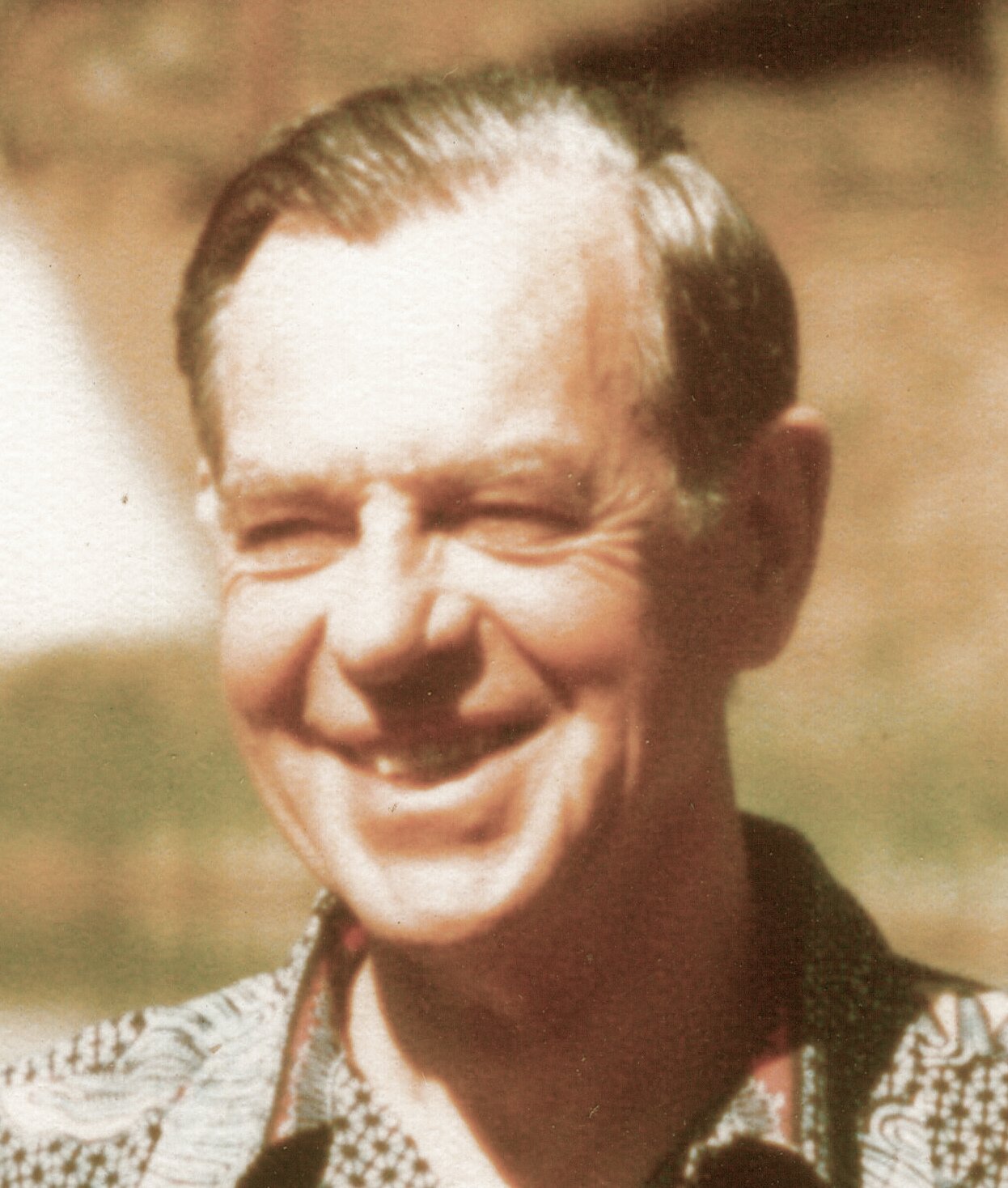
Joseph Campbell at Feathered Pipe Ranch, Montana, in the late 1970's. Photo: Joan Halifax
Zen Mountain Journal offers a Taoist journaling practice for those who seek to connect with inner worlds, with the deep silence and peace within. The poems and paintings in these posts are part of a journal now being created by Heron Dance Press. It will be available for preorder shortly.
The Zen Mountain Journal is reader supported but there is no obligation to contribute. If you would be willing to contribute, please do that here.