

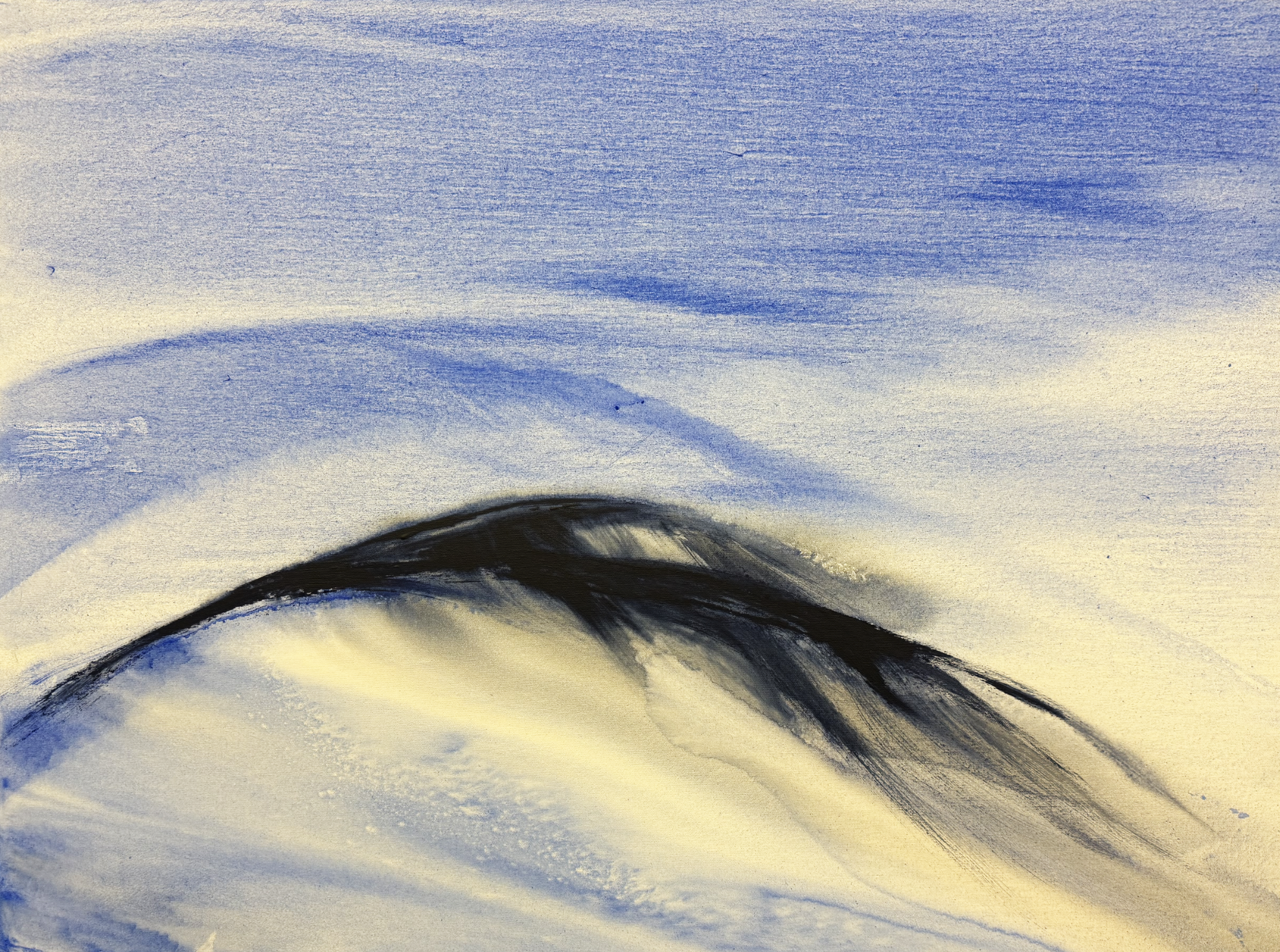
Shiro Tsujimura: Zen Pottery and the Inner Creative Life
The pottery and brush paintings of old Japan and Korea embody a rough, aesthetic beauty. That rough beauty is influenced by Zen Buddhism simplicity, which in turn has roots in the Tao mountain hermits of China two thousand years ago. Perhaps the most fascinating exploration of this beauty is the book The Unknown Craftsman by Soetsu Yanagi and potter Bernard Leach. Here are a couple of short quotes to give you an idea.
Beauty dislikes being captive to perfection. That which is profound never lends itself to logical explanation: it involves endless mystery.
Why should one reject the perfect in favor of the imperfect? The precise and perfect carries no overtones, admits of no freedom; the perfect is static and regulated, cold and hard. We in our own human imperfections are repelled by the perfect, since everything is apparent from the start and there is no suggestion of the infinite. Beauty must have room, must be associated with freedom. Freedom, indeed, is beauty. The love of the irregular is a sign of the basic quest for freedom.
Every artist knows that he is engaged in an encounter with infinity, and that work done with heart and hand is ultimately worship of Life Itself . . . a degree of enlightenment wherein infinity, however briefly, obliterates the minor self.
My respect for Yanagi’s work has led me to devote a couple of pages on the Zen Mountain Journal website to favorite excerpts from The Unknown Craftsman. You can view these here, and The Beauty in Imperfection here. A key concept in this work is that our lives, as well as our work in the world, are manifestations of our inner beauty, our friendship with ourselves, but also the result of grit, discipline and persistence. The creative life, the creation of a unique and beautiful life, is like the tip of an iceberg – what is manifested outwardly derives from the larger inner work under the surface.
Belief in these concepts is not confined to Zen Buddhism and Taoism. As Jesus reportedly said in the Sermon on the Mount (Matthew 7:16), “By their fruits ye shall know them”. I have been fortunate to come to know, through interviews I did in the early days of Heron Dance, the predecessor to Zen Mountain Journal, a number of individuals whose outward work was a manifestation of inner beauty. Frédéric Back, creator of the Oscar-award winning film, The Man Who Planted Trees was one such individual. Balbir Mathur, co-founder, with his wife Treva, of Trees for Life, which has provided tens of millions of fruit tree saplings to impoverished villages in rural India and other third world countries another. Len Soucy and his wife Diane who founded The Raptor Trust another. I could mention many more.
And there have been others that I’ve not met, but read about, including furniture maker Sam Maloof.
I have always believed in living a good life, aiming myself -- oh, how shall I put it? -- aiming myself true. . . I try to live right. I always try to adhere to what I think is right, and that, to me, is the most important part of creative work. Fashion comes and goes, but my pieces have to have the integrity of my vision.
Maloof derives his strength from resorting to something outside himself, from an appeal to an honorable code of conduct, an elevated sense of order, to a deep, abiding faith. He lives an ethical, right-minded life and cites integrity as the most important part of his work and of his creativity.
Sam believes in the unseen influences that guide him. That is the source of his risk taking, of his courage to create. He gives a quiet thanks, he shows respect, he behaves in the most correct way he knows how, and then he sits down to make a piece of furniture.
- Furniture-maker Sam Maloof, as quoted in the book Uncommon Genius by Denise Shekerjian.
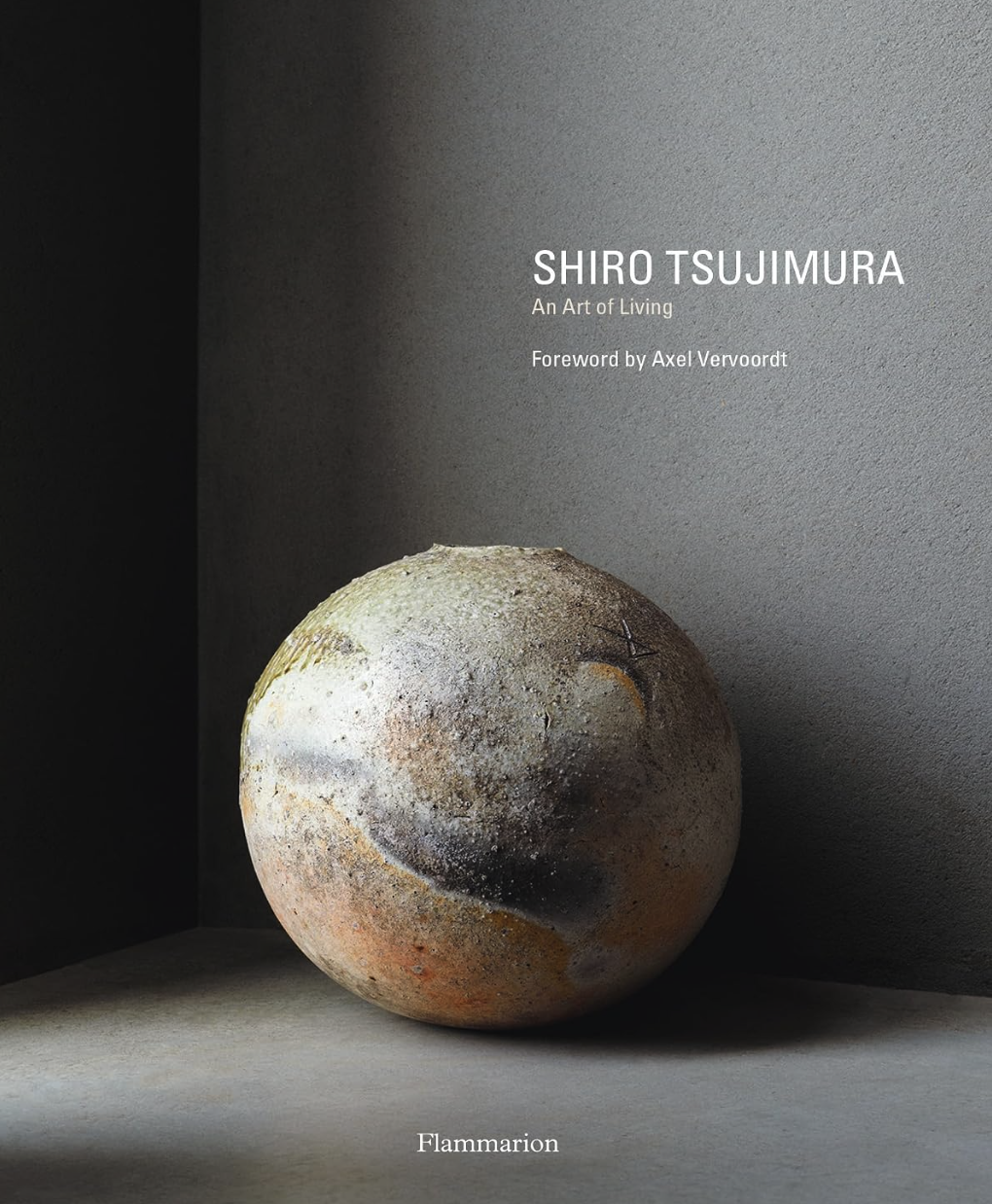
I recently came across the work of Japanese potter Shiro Tsujimura and his work, and the life he’s led, captured my imagination. He was born in 1947 to a farming family near Nara, which in turn is near Kyoto, a beautiful ancient city of Buddhist temples, gardens, imperial palaces, Shinto shrines and traditional wooden houses. After high school, he entered a Zen monastery.
I shaved my head, donned a robe, and began a life of Zen-centered asceticism. I arose at 4:30 a.m., meditated, read sutras, and did all kinds of chores. When this was no longer enough, I was sent on a pilgrimage. I took enough money with me to cover my funeral expenses.
Sometimes I slept in a temple, sometimes in the open air; sometimes I headed for the mountains, taking along a little food, and did zazen [Zen meditation] for a few days. All the same, after less than two years had passed, I decided to conclude my life as an ascetic monk. I felt that these Zen practices were only a way to escape from myself and from my painting. At the same time, pursuing something that emanates from my inner being, and something that emerges from making things-these two things are the basis of my life.
I chose ceramics, calligraphy, and painting because they are spontaneous art forms. In the spiritual sense, they are all the same -- art is an expression from the body.
- From the beautiful book of his art, Shiro Tsujimura, An Art of Living, as are the quotes below. I’ve begun work on a series of abstract paintings inspired by his pottery.
In 1969, at the age of 22, Shiro purchased three quarters of an acre near Nara, upon which he built a small shack out of found, abandoned and donated building materials.
Building this hut, painting, ceramics, selling my wares -- these are all one and the same thing for me. I wish to continue searching for that "something" that comes from my inner Zen and from making things.
In 1970, I visited the Japan Folk Crafts Museum in Tokyo, where much of the folk art collected by Soetsu Yanagi and his folk art movement are exhibited. There I discovered a large oido teabowl among the many works on display. “This is it!“ The generosity that emanated from this bowl -- the way it embraced everything, good and bad, and yet was not overbearing -- moved me deeply. I reveled in gazing at it for a long time. . . (but) when asked what it was about the shape and color of the oido bowl that attracted me, can't remember a single thing about either. The bowl was not identified; it was simply marked oido and was kept in a glass case along with other objects in a room on the second floor. There were also a lot of old textiles, furniture, and pottery downstairs, but once I found the oido bowl, I forgot about the rest of the exhibits and didn't move. Thinking back, all that I remember is what a comforting feeling it gave me.
I can only say that I felt as if I was facing a person rather than a bowl, and that I seemed to be in the presence of the [Buddhist] Divine Mother and the Great Compassion. The bowl was far more than its form, far more than its color. . . In my handiwork made with clay, I wish to express the state of divine motherly compassion, the quietude embracing all good and evil, which the oido teabowl had expressed. In other words, I want to create nothing other than this state of mind. Imitating the shape of the oido bowl is not the point; I have no desire to imitate an oido bowl, no matter how wonderful it is. All that I can hope to do is to clarify how I felt when I saw the bowl, what had been hidden inside me, and what had attracted me to it so intensely.
Have I been able to explain to some extent why I create ceramics? It seems to me that there is a limit to what can be expressed in words. I wish to live my life without being overwhelmed, wondering all the while how far my working with soil, starting from scratch, can advance and expand within me.
Within a year after seeing that oido bowl he built his first pottery kiln. One of the more fascinating aspects of his work is his preference for the clay found around his home over that which is commercially available. In the book, he often refers to it as “soil”.
As if caressing the soil, help it along with your fingers. This is a way to create: lend a hand to the soil just a little. If you try to force it, you'll destroy the soil. Don't try to control it, try to follow it.
As I have already said, clay has a strong personality. If I emphasize myself in the process, the personality of the clay will vanish. In practice, however, I try to make the clay my own, even if it is difficult to find the right balance between myself and the clay.
From fields and mountains, I gather soil that suits me. Then I pound it with a mallet, sift it, and mix it with water to make potter's clay. If you use clay that has been mass-produced in a factory, the process is simple. Factory-made clay is easy to use and has no imperfections. On the other hand, it is also a clay without character. The clay I collect in nature is exceptionally rough and does not stretch. It's viscous and easily degraded. It's too easily damaged by fire yet too resistant to it. In a word, a clay with such "drawbacks" is also a clay with character. Accordingly, unique pottery can be made from unique clay, even if many "mistakes" can occur in the process.
For decades, Shiro sold his tea bowls and other creations on straw mats in front of the Nanzenji temple, the Kyoto National Museum, along the rice paddies in Ohara, and in front of the Sanjūsangen-dō temple in Kyoto. In the book, a collector of his work, Hiroshi Sugimoto, described his first meeting with Shiro.
I met Tsujimura forty years ago when I was just starting to dabble in antiques. He took me to a dilapidated shack on the very edge of the forested hills, far from the inhabited parts of Nara. I recall him telling me, with no hint of boastfulness, that he had built the place himself. He had either scavenged or been given all of the building materials. He struck me as a man with no interest in the business world. There were two small children cavorting about, stark naked and barefoot. They reminded me of free-range chickens.
. . .When I asked him where he sold his teabowls, he explained that until recently he and his wife had been selling them off a straw mat on the ground in front of the Sanjūsangen-dō temple in Kyoto.
There was an earthenware jar to one side of the door of the shack. Peering in, I caught a glimpse of some coins and banknotes. When people who dropped by bought his ceramics, they would throw cash into the jar, which he would help himself to whenever he went shopping. I felt as though the money economy had suddenly intruded into the life of a man from the Jōmon period (c. 14,000-300 BCE).
Now his pottery is world-renowned and sells for thousands of dollars per piece.
. . .
Journal Notes: A conversation with your creative work
Standing before the oido bowl, Tsujimura felt he was "facing a person rather than a bowl." He gazed at it so long he forgot the rest of the museum. He has spent the next sixty years creating pottery, and he’s not done yet. A work of art — including the ones we make, finished or not — has an inner life of its own. Imagine your creative work, which may be the life you are creating, as a person — a person of wisdom and beauty. Converse with it
This work may be the one that is the focus of your creative life now, or one abandoned years ago. If an abandoned work, look for those unfinished endeavors that still carry emotion or awaken a feeling when you think of them — that twinge may be a sign that they are still alive. Now, with the changing circumstances of our life, with your deeper and more complete life experience, that work may offer possibilities not recognized or available in times past.
Write a few lines about the history of your current work, or your previous endeavor. When did it begin? What led to the idea? What difficulties did you, or are you now, encountering? Record brief entries — facts and memories, not explanations or apologies.
In your quiet place, close your eyes. Let your breathing slow. Feel the presence of the work — its beginnings, its possibilities, its setbacks — and let it take the form of a person sitting across from you. Greet it. Ask it if it has anything it would like to say. Then write the conversation as it comes without contriving or editing. Long pauses are fine. Wait for it to finish speaking.
Then ask it how it thinks you are treating it, or did treat it. Ask it what it needs to flourish. Ask it if it has anything else to say.
Don't judge what emerges. A neglected work may be angry; an old one may surprise you with its patience. Whatever it says is a reading of your connection to the work now.
Put the pages away. Wait a week before reading them. Then, if the conversation wants to continue, let it.