


The River Had Entered Wu: The Taoist Creative Process
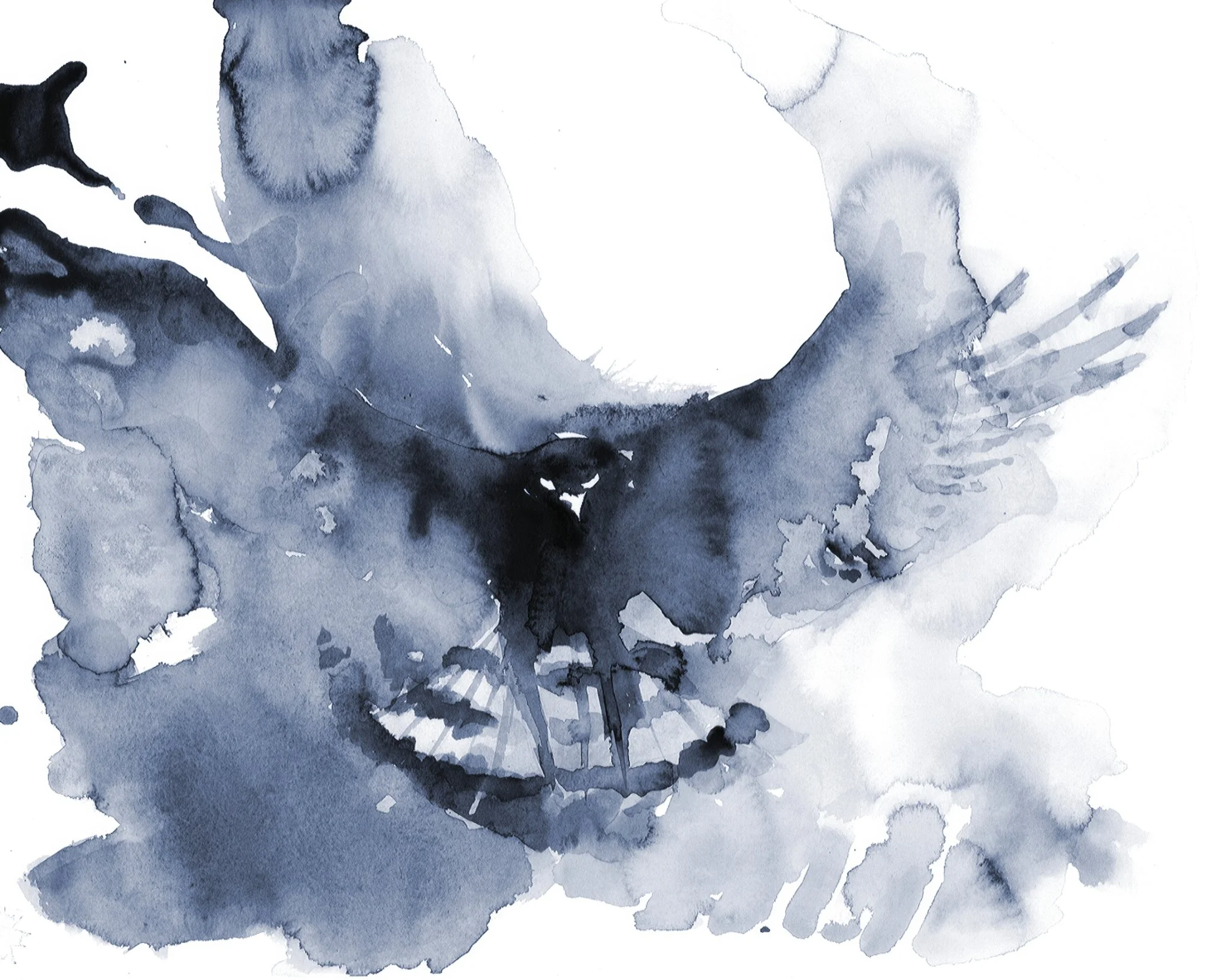
Wu Daozi, the legendary Tang dynasty painter, remains one of the most influential figures in Chinese art. Although none of his original paintings survive, stories about his Taoist creative process continue to inspire artists, writers, and contemplatives. This reflection explores the contrast between careful study and the art of painting from memory—asking whether great art comes from preparation alone, or from absorbing the spirit of a subject so deeply that it moves through the hand without force.
The River Had Entered Wu
The emperor, enamored of the Jialing River,
commissioned the two leading artists of the day,
Li Ssu-hsun and Wu Daozi,
to paint its course on palace walls —
rapids, waterfalls, gorges and quiet pools.
Li sketched and catalogued,
filled notebooks with river facts,
measured the angles of cliffs
and the river’s flow.
Thus prepared, he returned to the capital
and began to paint.
Meanwhile, Wu drank wine,
relaxed in bars,
and enjoyed the company
of sing-song girls.
After thus achieving a relaxed frame mind
Wu headed off to walk the river’s banks,
Meditate along its shore.
Listen to birdsong
And swim in quiet pools.
He saw more than looked.
Listened more than heard.
Meanwhile, the deadline loomed
And the emperor’s courtiers fretted.
Li’s brushwork now adorned the palace walls —
accurate, magnificent, complete.
Still, from Wu, no word.
With only two days left before
the emperor’s deadline,
Wu finally appeared
and picked up his brush.
Wu painted not the river.
But the thirst of the river.
Not the cliff face —
but the way stone dreams of falling.
Not pilgrims on a bridge
but the hollow sound
their footsteps make
when the gorge below
is very deep.
Two days later,
no one could say
exactly what Wu had painted,
only that it was very good.
The river had entered Wu:
early morning mountain air
rising cold from river gorge.
. . .
Background: The Way of Wu
Wu Daozi is considered the supreme figure of Tang dynasty court painting — one of those rare artists whose legend outlasted every canvas he touched. None of his originals survive. What remains are descriptions, later copies, and stories that were probably already legendary by the time they were first written in 847 CE. One story in particular has traveled across twelve centuries without losing its potency.
Emperor Xuanzong commissioned two painters to depict the Jialing River on palace walls — three hundred li of wild Sichuan gorges, cataracts, and mountain air. Li Ssu-hsun, who had invented the distinctive style of dramatic, jagged mountains rendered in mineral azurite and malachite, worked with characteristic discipline: sketches, notes, the long careful labor of a man who trusted preparation. When he finished months later, the emperor said that at night he could hear the water plunging over the waterfall in Li’s picture.
Wu Daozi on the other hand went to Sichuan, haunted the inns, drank wine, cavorted with the bar girls but did no visible work. Afterwards, his spirits in fine form, he headed off to the river to walk its banks, lay under its trees, and listen to the river’s music. Then, the feeling of the river deeply impressed upon his psyche, he returned to the capital full of creative imagination. In a single day, or maybe two – the legend varies from teller to teller – he painted the entire river from memory — three hundred li of it — with brushwork of such sweeping power that crowds gathered to watch him work.
Both painters were judged masters. The story does not ask us to dismiss Li. It asks us to consider what Wu knew that Li did not — or rather, what Wu trusted that Li could not afford to.
The river had entered Wu. The wine, the aimless wandering allowed Wu to relax into the spirit of the river.
This is an old argument in art—what the Taoists called wu wei, effortless action: whether the thing is made from careful study of reference material or made from the images that impress themselves upon the deeper levels of the mind. It is the question Taoist painters returned to again and again: not how to depict a river, but how to become it. Wu’s answer was not laziness. It was a different kind of discipline — the discipline of full absorption, of letting images settle on the back of the mind, and then wait to see which ones prevail, which ones emerge.
What emerges moves through the hand without interference.
Reflection
The ultimate creative expression in art is to capture the essence, the spirit, of a subject with as few brush strokes as possible. It doesn’t have to look like the actual subject. In fact, if the artist can, through exaggeration, capture something deeper, the work is, for me, more profound.
Wu’s wild brush strokes, executed without hesitation and without preliminary sketches, are often on my mind as I paint. I strive to capture his lessons in my work, and occasionally succeed.