But for birdsong, the mountain would be quiet

Friend through years and decades
From my doorway
I watch you leave the mountain
And disappear into the darkness of night.
When will I see you again?
Leaves disappear with the autumn winds
And reappear as green buds in the spring
That is the pattern
That is the Way.
Let’s roam the galaxy,
Lost in imaginary worlds
But for birdsong,
The mountain would be quiet.
This quiet, punctuated only by birdsong, echoes the ancient wisdom of poets like Wang Wei and Han Shan. They understood that such sounds are not interruptions, but rather invitations to deeper presence and the experience of emptiness, revealing the profound stillness that underlies all phenomena.
Distrust emotion.
Zen Poetry and the Quiet Mountain
This meditation draws from the tradition of ancient Chinese Zen poets like Wang Wei and Han Shan (Cold Mountain), who found the Tao in wilderness solitude and the small sounds that punctuate silence. Their poetry teaches us to listen—not only to birdsong, but to the quiet that surrounds it.
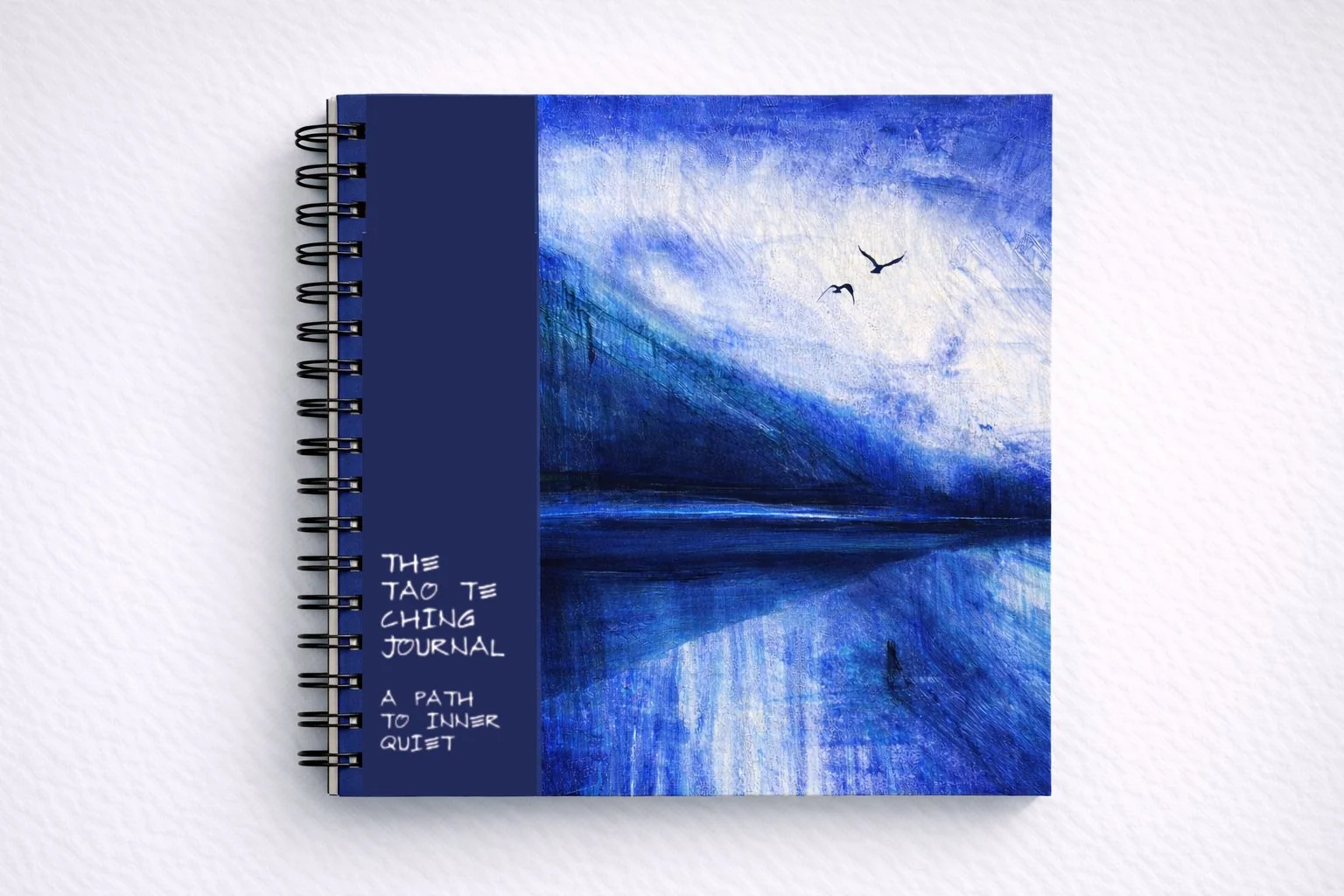
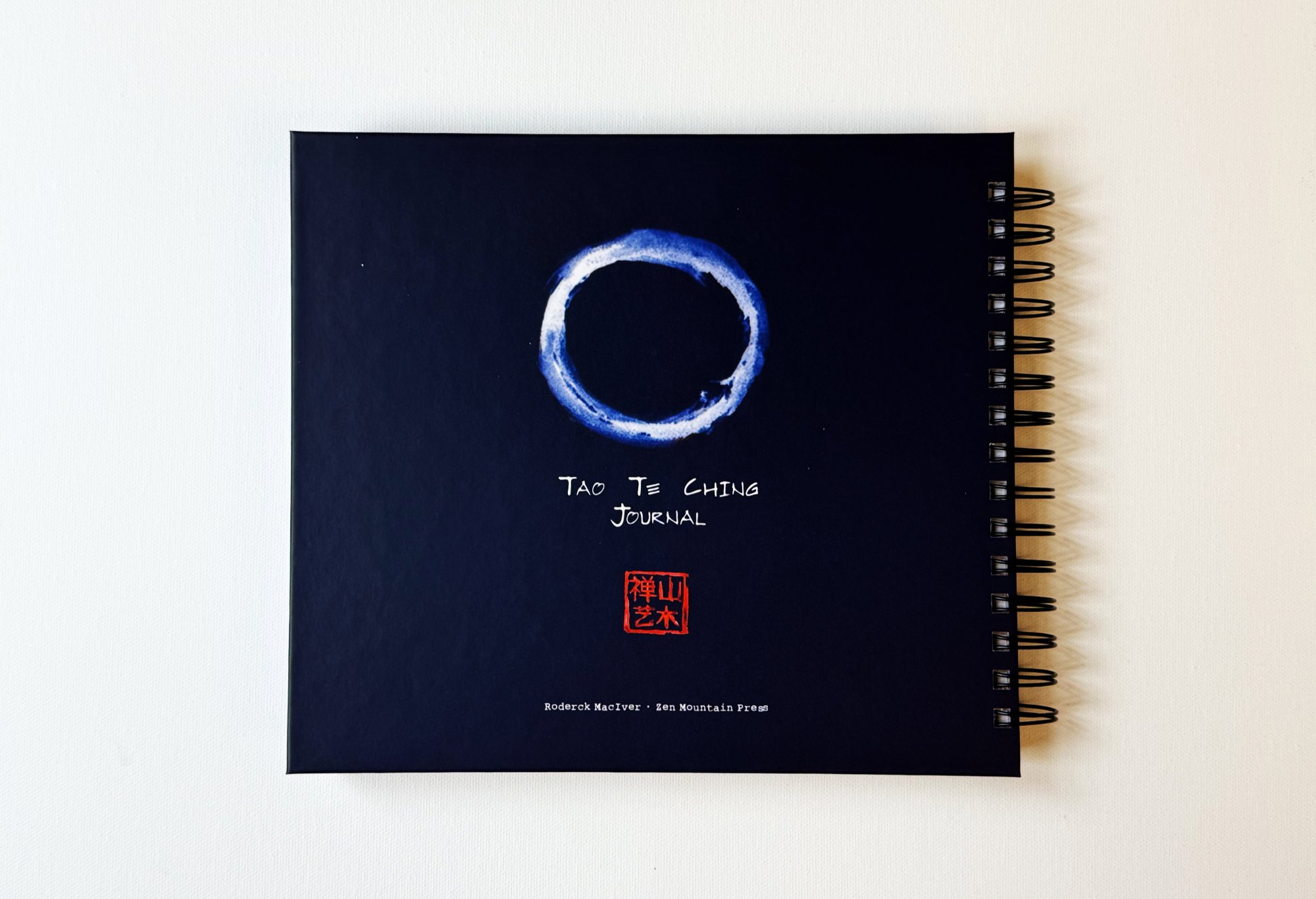
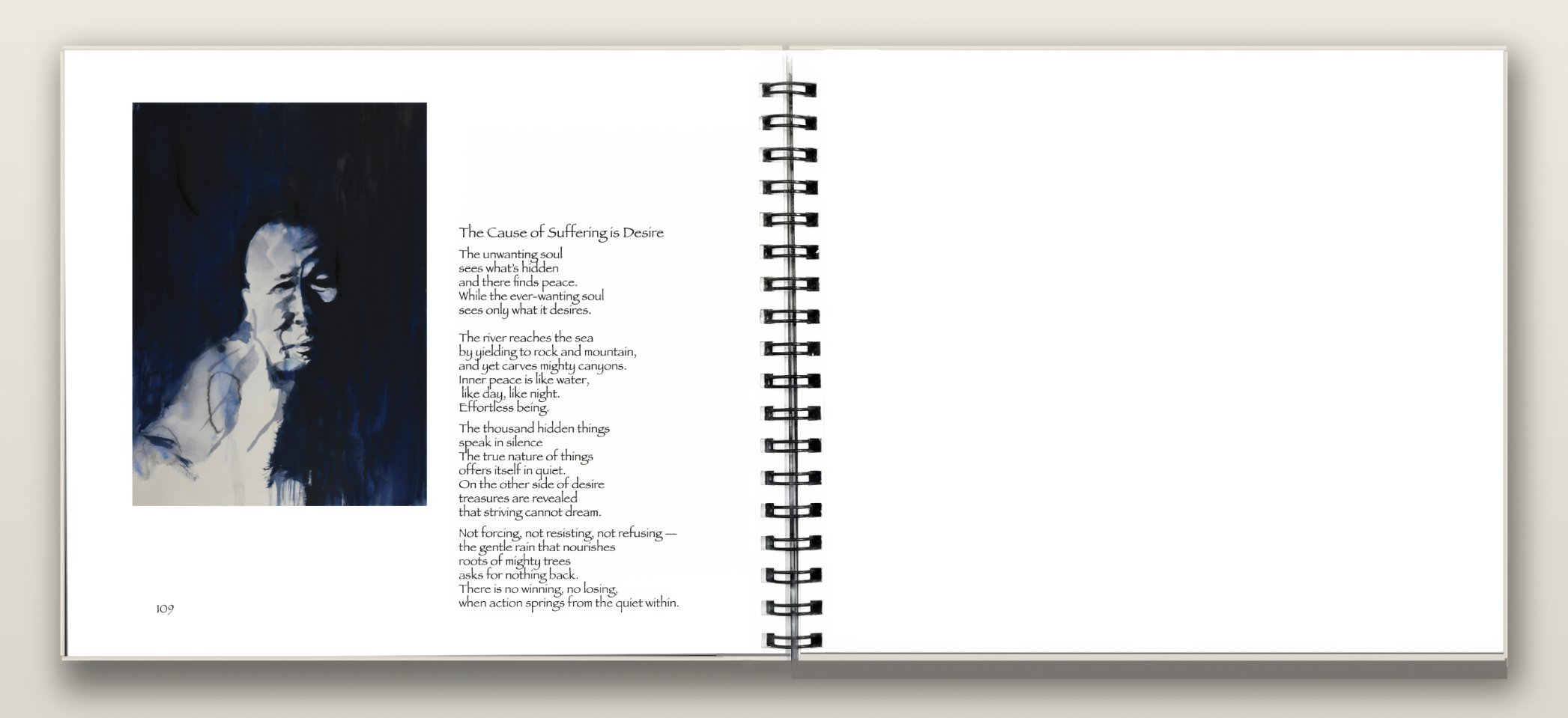
The Tao Te Ching Journal: A Path To Inner Quiet
Zen Mountain Journal blends Taoist hermit poetry, contemplative art, and reflections drawn from a lifetime shaped by wilderness, solitude, and decades doing creative work on the outer boundaries of our culture. These journals are companions for seekers — guides in the reconnection with inner quiet, beauty, and the “soundless music” of a life lived with simplicity and meaning.
• Size: 9.25 × 8.5 inches — convenient size for desk or lap.
• Hardcover — the book can be written in without a table or desk.
• Double wire-o bound to lay flat.
• Printed on Mohawk Superfine, a premium uncoated paper for a beautiful writing surface.
• 160 pages.