

Chuang Tzu, Thomas Merton and
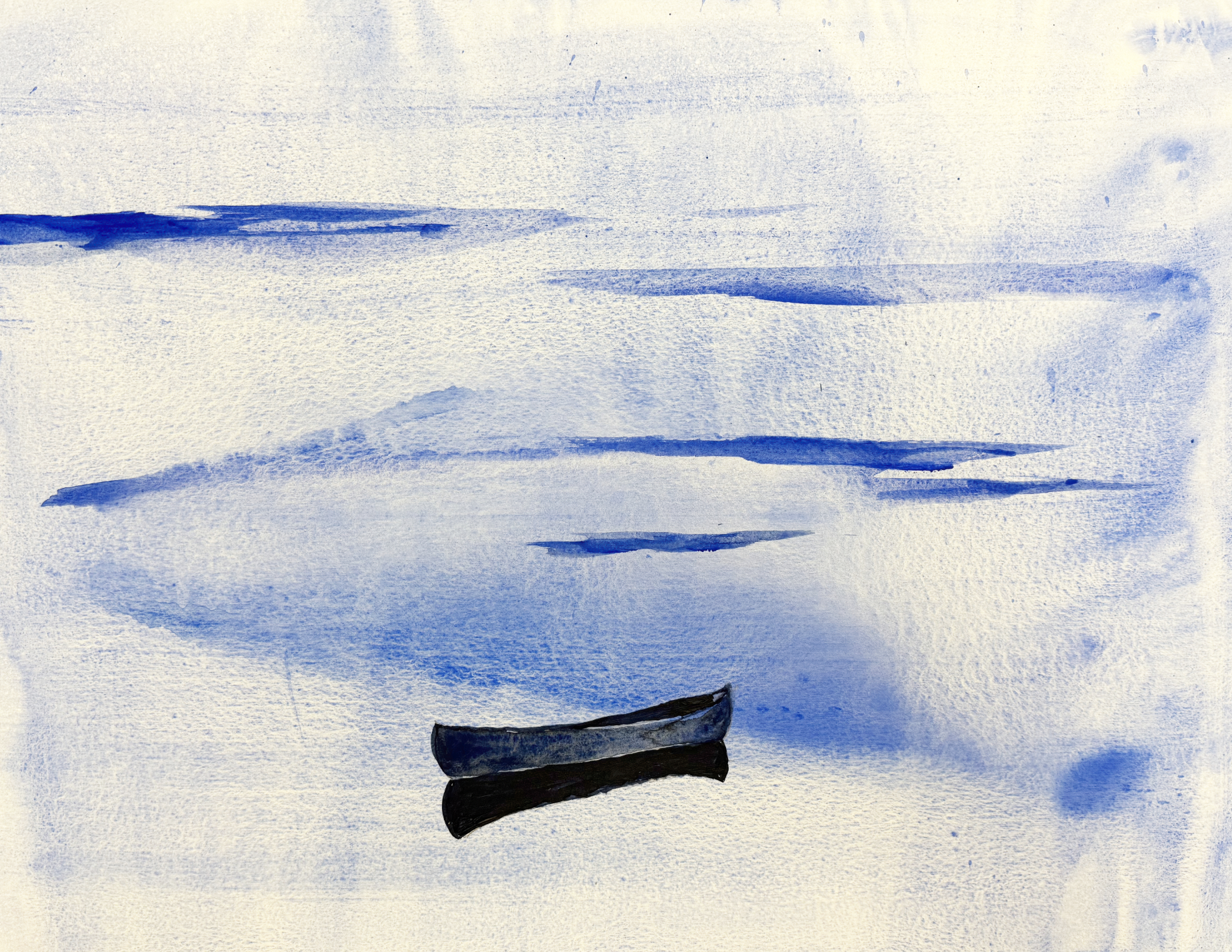
The Empty Boat
One of the things he liked most about the hermitage was the silence. “Silence is my music now.” He could pick up the small sounds of insects and animals. Sometimes when the wind was strong, it blew the sound of the traffic to him. He liked to think of all the people going on with their lives and to think of himself as in a sense staying where he was for their sakes, “like a lighthouse keeper.”
- Phyllis Rose, “The Music of Silence”, Atlantic Monthly, writing about Thomas Merton
Forests and fields, sun and wind and sky, earth and water, all speak the same language: peace, solitude, silence. Happiness is not a matter of intensity, but of balance and order and rhythm and harmony.
- Thomas Merton
I’ve long been an avid reader of the works of Thomas Merton, Trappist monk, who lived for many years in a hermitage on the property of Abbey of Our Lady of Gethsemani in Kentucky. He wrote sixty books including the posthumously published “My Argument with the Gestapo,” from which I’ve frequently quoted over the years.
"If you want to identify me," he says to the British officers who are questioning him, "ask me not where I live, or what I like to eat, or how I comb my hair, but ask me what I think I am living for, in detail, and ask me what I think is keeping me from living fully for the thing I want to live for. Between these two answers you can determine the identity of any person.
Merton is also the author of one of my favorite all time essays, Rain and the Rhinoceros, which I’ve posted on the Zen Mountain Journal website here. One of Merton’s books, and the subject of this post, is The Way of Chuang Tzu. In Merton’s words, from the introduction:
The classic period of Chinese philosophy covers about three hundred years, from 550 to 250 B.C. Chuang Tzu, the greatest of the Taoist writers whose historical existence can be verified (we cannot be sure of Lao Tzu), flourished toward the end of this period . . .
- Merton, Thomas. The Way of Chuang Tzu.
Merton worked on the book for five years and and said that he “enjoyed writing this book more than any other I can remember.” The Dalai Lama wrote in the foreword,
I have been moved a great deal today at this memorial or recollection of the life of Thomas Merton, and I am very happy that we have done this. From the point of view of a religious practitioner, and in particular as a monastic, Thomas Merton really is someone that we can look up to. From one point of view, he had the complete qualities of hearing—which means study, contemplating, thinking on the teachings—and of meditation. He also had the qualities of being learned, disciplined and having a good heart. He not only was able to practice himself, but his perspective was very, very broad. . . for the rest of my life, the impact of meeting him will remain until my last breath. I really want to state that I make this commitment, and this will remain until my last breath.
Several of the poems Merton interpreted for the book deal with the subject of inner peace. One has in particular captured my imagination. I offer my interpretation below.
The Empty Boat
If, when crossing a river
A paddler encounters another canoe
And that canoe collides with his
What follows depends on whether or not
There is someone in the offending boat.
Empty, the paddler shrugs and continues
Perhaps puzzled but not angry.
But, if the offending boat contains another paddler
And especially if prior to colliding that paddler
Was warned off, anger, unkind words
Often ensue.
Chuang Tzu, Taoist poet
Suggests we empty ourselves
And in doing so, we abandon
Emotion, anger.
Empty of self-righteousness
We cross the river of the world
Unopposed. Unimpeded.
Almost invisible.
Be lost in the masses of men
No name, no fame, no distinction
Unseen, you will flow like the Tao
Judge no one, and no one will judge you.
The boat of the perfect man
Is empty.
- Zen Mountain Journal interpretation.
In offering my interpretation, after study and meditation, I try to boil the poem down to its Zen-like essence as shaped by my own experience. To read Merton’s interpretation, visit here.
For my other favorite Thomas Merton quotes, visit here.