

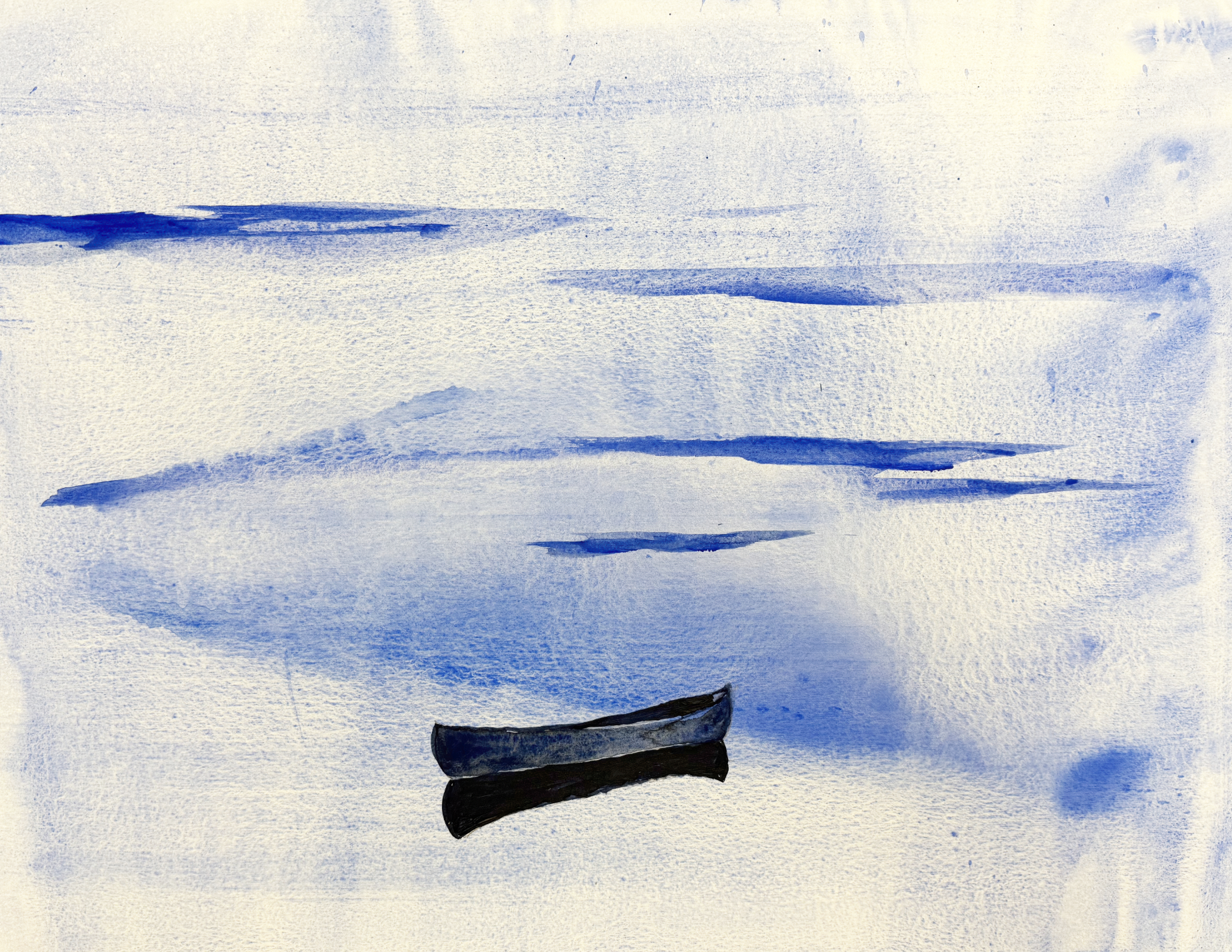
Chuang Tzu: The Empty Boat
The following interpretation of Chuang Tzu’s classic poem, “The Empty Boat”, is by Thomas Merton, Trappist monk and author of The Way of Chuang Tzu.
THE EMPTY BOAT
He who rules men lives in confusion;
He who is ruled by men lives in sorrow.
Yao therefore desired
Neither to influence others
Nor to be influenced by them.
The way to get clear of confusion
And free of sorrow
Is to live with Tao
In the land of the great Void.
If a man is crossing a river
And an empty boat collides with his own skiff,
Even though he be a bad-tempered man
He will not become very angry.
But if he sees a man in the boat,
He will shout at him to steer clear.
If the shout is not heard, he will shout again,
And yet again, and begin cursing.
And all because there is somebody in the boat.
Yet if the boat were empty,
He would not be shouting, and not angry.
If you can empty your own boat
Crossing the river of the world,
No one will oppose you,
No one will seek to harm you.
Who can free himself from achievement
And from fame, descend and be lost
Amid the masses of men?
He will flow like Tao, unseen,
He will go about like Life itself
With no name and no home.
Simple is he, without distinction.
To all appearances he is a fool.
His steps leave no trace.
He has no power.
He achieves nothing, has no reputation.
Since he judges no one
No one judges him.
Such is the perfect man:
His boat is empty.
- Merton, Thomas. from the book The Way of Chuang Tzu
For more on this poem and its background, visit here.
For my favorite Thomas Merton quotes, visit here.
For my favorite Thomas Merton essay, “The Rain and the Rhinoceroses”, visit here.
Other Buddhist and Taoist pages on our website that may be of interest.