A Basketmaker in Rural Japan
Kudo Masanori had learned by imitating the work of other basketmakers in the region when customers gave him baskets to repair or copy. In particular, he had tried to replicate the baskets of a craftsman known to everyone simply as Ushi-don ("Uncle Ushi," don being the colloquial term of respect equivalent to san used for addressing elder men). That itinerant basketmaker was the man whom Mr. Hiroshima came to revere as his own true teacher. "I've never seen work finer than his -- perhaps no one could do anything better."
Mr. Hiroshima met the man only once, by chance, in 1930, when he was fifteen and Ushi-don was in his sixties. "I was working in the hut by the side of the road that I shared with my teacher in Kusubaru; my teacher was away fishing. Ushi-don happened to come by. A colander (shoke) my teacher had made was hanging on the wall. He asked me to show it to him. 'For the work of someone who hasn't learned from a real teacher, it will do.' He implied that it didn't compare to his own work but was acceptable -- he praised it.
"Then he added, 'When Masanori comes back, tell him to make a sturdier rim for this basket. The baskets I make aren't wobbly like this.' To prove his point he gave me a colander and a tray [bara] that he had made. He left me with that injunction, and I never saw him again. The rim is the lifeblood of a colander; if it breaks, the basket falls apart. My teacher hadn't learned how to make a really good rim. I was just an apprentice; I couldn't dishonor my teacher, but even now I cannot forget that Ushi-don. The wish to be like him -- to possess his skill -- is with me still. There's no one alive whose work can compare to his."
In the past, the basketmaker's dependence upon his skills for his ability to earn a living created a reluctance to let others see his working processes -- if they were copied, he would lose customers. Ushi-don in particular was known as a loner who did not take apprentices. But Mr. Hiroshima learned Ushi-don's skills when he repaired baskets made by the older craftsman. In dismantling the baskets, he saw that Ushi-don had not taken shortcuts even on aspects of construction not visible to the user. "The round baskets he made stayed round; they didn't become oval or weak and fall apart." Finally Mr. Hiroshima discovered how Ushi-don made the rim so that the end of the bamboo wrapping element would not work loose and come out -- by tucking the end in the opposite direction from the way the rim had been wrapped, to counteract the torque. Mr. Hiroshima carries on Ushi-don's creed of not scrimping on the details of even the simplest basket-such as the eel trap that inevitably gets washed away in the river currents. He can recognize where a basketmaker cheated on the details, and he considers such baskets "fakes."
Among surviving baskets by Ushi-don are many with beautiful fine weaves, none that are coarsely woven. Mr. Hiroshima heard numerous stories about Ushi-don's meticulousness in selecting raw materials: asked to make some baskets for a household, he might go to the farmer's hillside to cut bamboo and end up declining the work because not a single stalk in the grove was worth using. Flaunting conventions of farming society, which restricted drinking to festivals, Ushi-don liked to drink barley liquor (shochu) before starting work….
- A Basketmaker in Rural Japan, published by the Smithsonian Insitution, Arthur M. Sackler Gallery
. . .
The Tao Te Ching Journal is now available for pre-order. Pre-order here. Read more here. Anticipated publication mid-June. The pre-order price is $57, after publication $67. Readers who pre-order receive copies with a signed bookplate thanking you for supporting the work and making it possible. Shipping $14.95. Supporting members are entitled to free shipping.
Everything Heron Dance does and offers is summarized here.
Zen Buddhism resulted from the encounter between Buddhism from India and Taoism from northern China. Poetry was an important part of the tradition of the Taoist hermit monks of the Zhongnan Mountains. The Tao Te Ching is the best known of those poems but there were thousands of others written over two thousand years ago. Many are as beautiful and mysterious as the Tao.
Zen Mountain Journal also draws from the poetry of the Zen Buddhist monks of old Japan.
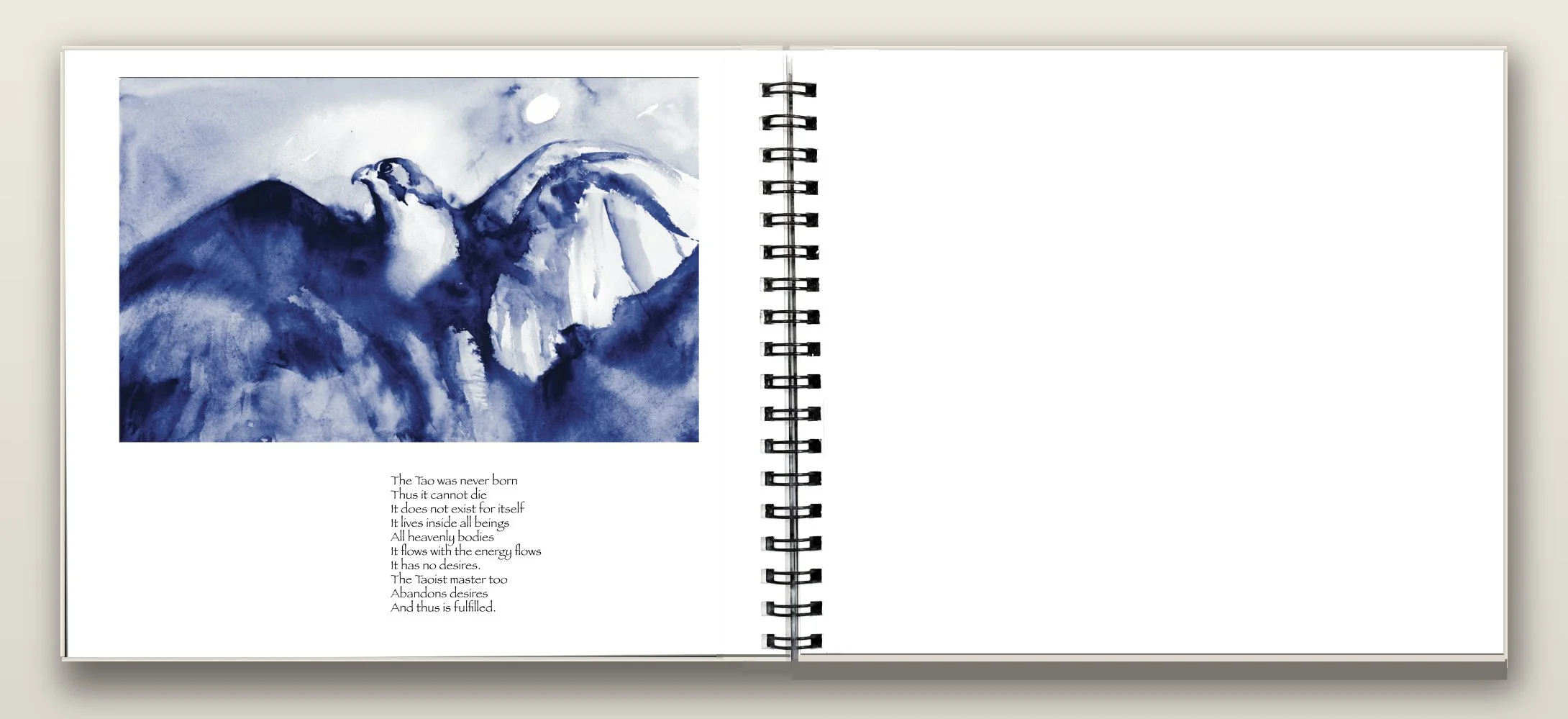
Zen Mountain Journal offers a Taoist journaling practice for those who seek to connect with inner worlds, with the deep silence and peace within. The poems and paintings in these posts are part of a journal now being created by Heron Dance Press. It will be available for preorder shortly.
The Zen Mountain Journal is reader supported but there is no obligation to contribute. If you would be willing to contribute, please do that here.
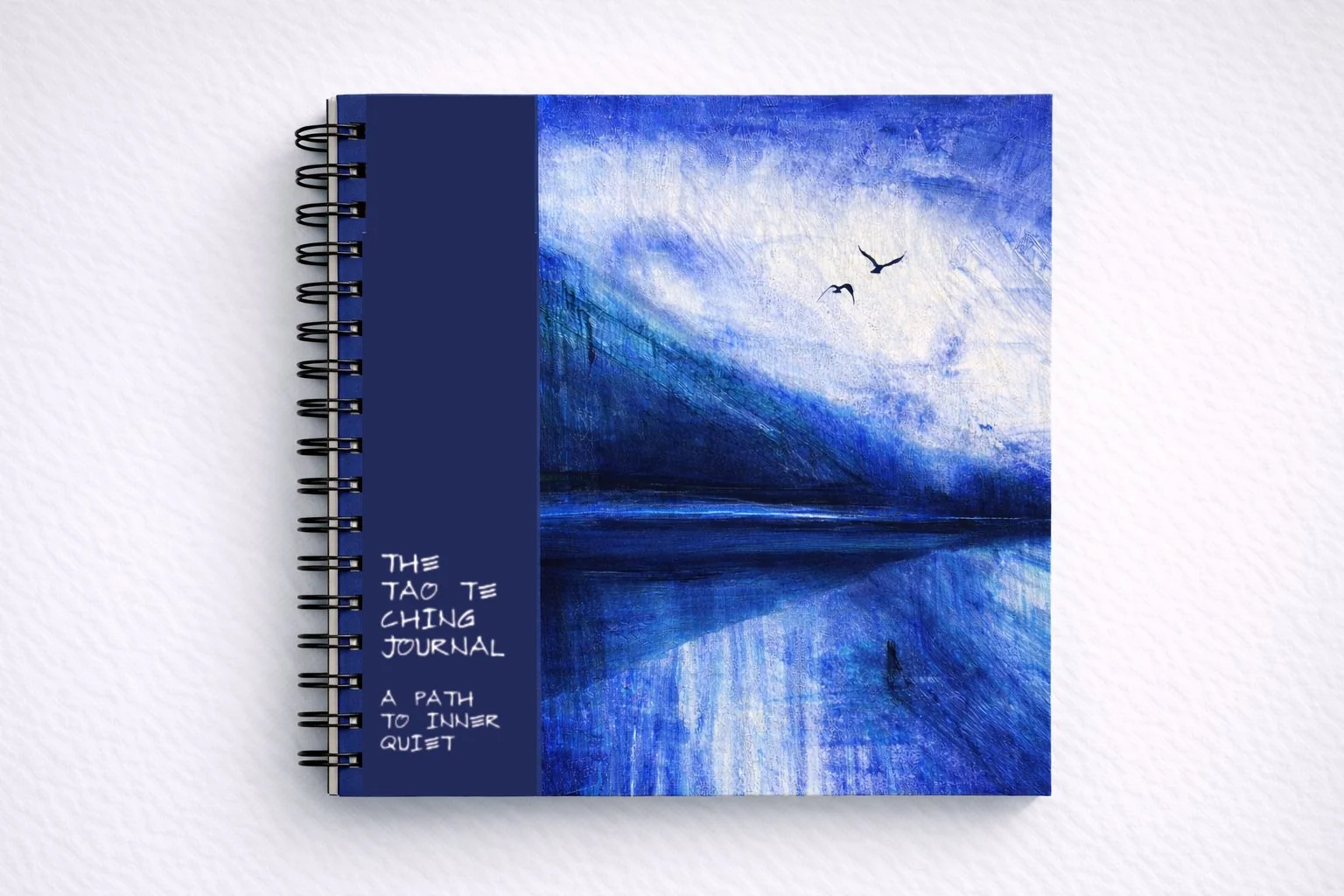

The Tao Te Ching Journal: A Path To Inner Quiet
All pre-orders receive a signed bookplate expressing the author’s appreciation for helping make this Journal possible.
Zen Mountain Journal blends Taoist hermit poetry, contemplative art, and reflections drawn from a lifetime shaped by wilderness, solitude, and decades doing creative work on the outer boundaries of our culture. These journals are companions for seekers — guides in the reconnection with inner quiet, beauty, and the “soundless music” of a life lived with simplicity and meaning.
• Size: 9.25 × 8.5 inches — convenient size for desk or lap.
• Hardcover — the book can be written in without a table or desk.
• Double wire-o bound to lay flat.
• Printed on Mohawk Superfine, a premium uncoated paper for a beautiful writing surface.
• 160 pages.