Joseph Campbell:
Each time, there is the same problem: Do I dare?
Reflection
Now that that the Tao Te Ching Journal is at the printer, what’s next? If the Tao is my guiding light, my compass, where does it point next? On its own, absent a real life, the Tao is interesting reading. The challenge is always: how do we actually execute a life? How do we create a life that is in harmony with the Tao, with our inner world, our moral compass? A life lived with integrity and courage has its own costs. It is, of course, not the easy life.
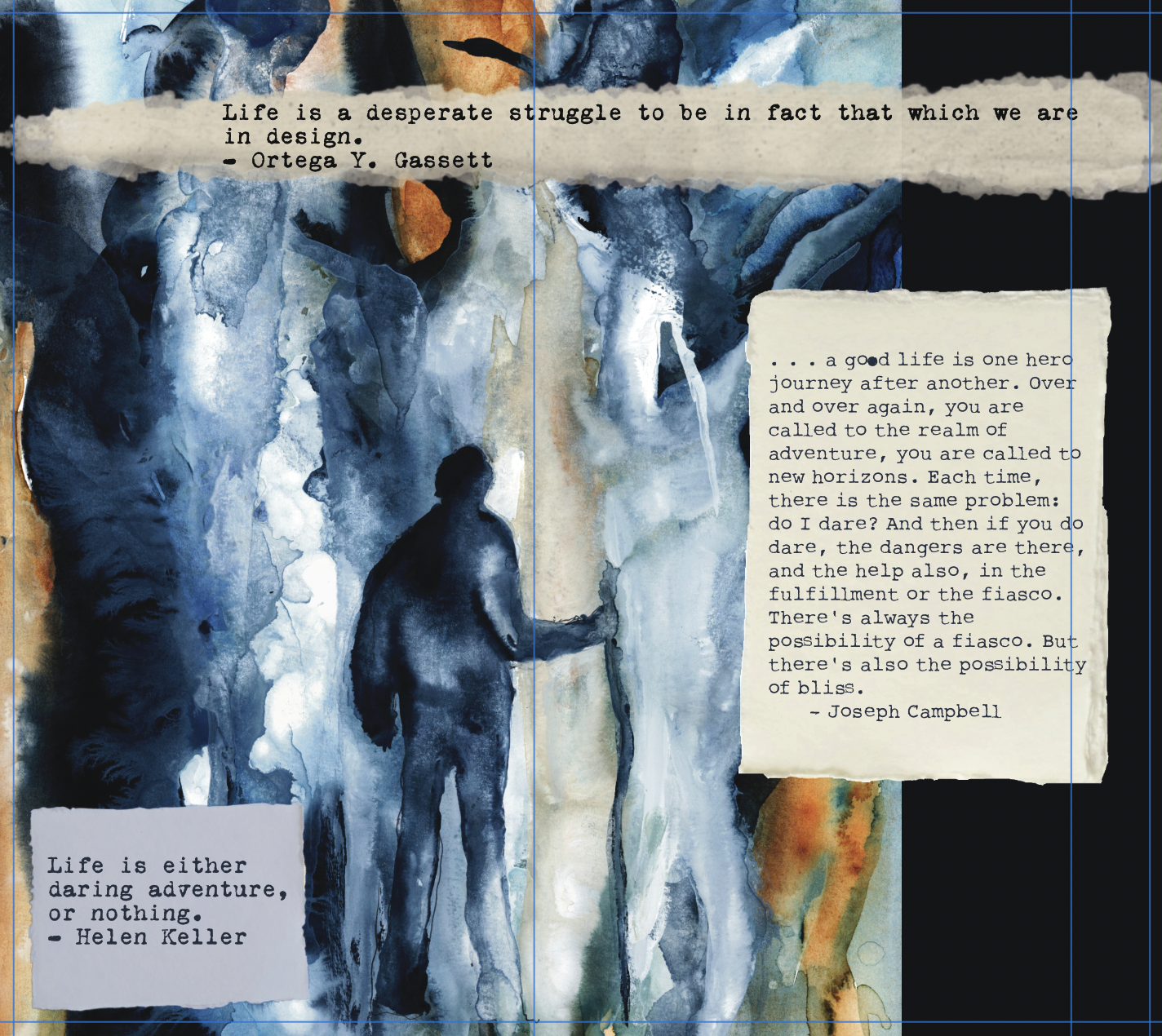
Life is a desperate struggle to be in fact that which we are in design.
- Ortega Y. Gassett
I spent a lot of time in the last week meditating on that. The easiest path is to move on, from here, to Han San (Cold Mountain), to Li Po and his beautiful mountain poetry, to Ryokan and Basho, and the journey itself is home. All thought-provoking, all beautiful, but the real challenge is living this stuff. What does a life look like that lives the Tao? The Tao’s message is simple. I know though, having tried to live it, that in practice it is difficult, challenging, full of both setbacks and progress.
What I think is that a good life is one hero journey after another. Over and over again, you are called to the realm of adventure, you are called to new horizons. Each time, there is the same problem: do I dare? And then if you do dare, the dangers are there, and the help also, and the fulfillment or the fiasco. There's always the possibility of a fiasco. But there's also the possibility of bliss.
- Joseph Campbell, Pathways to Bliss, published after his death.
Joseph Campbell talks a lot about living on the edge, about the hero’s journey, about the life of trials and tribulations where one is constantly challenged to embrace one’s adventure. He, himself, though was a school teacher and scholar. He grew up in a wealthy family, went to private school. He lived a secure life, one well within the boundaries of a middle class existence. He did not actually embark, himself, on the hero’s journey. Risk in the abstract is different from risk lived.
I’ve failed a lot in my life. I’ve lived on the edge, whether as an artist or as a whitewater kayaker. I know failure. I know success. I haven’t worked for anyone since I was seventeen on a salary or hourly wage. Fifty-three years ago, at the age of sixteen, I hitchhiked up into as far as the road went – Yellowknife, NWT and lived in the bush with Indians who couldn’t speak English and had only a vague concept of what Canada was.
A couple of years earlier, canoeing in northern Quebec with the YMCA, I came across abandoned Cree cabins by remote lakes and became fascinated by the lives of those people. I became obsessed with learning more about how they lived and saw life. I wanted to know how they connected with nature and with each other. I learned, living with Dogrib Indians in the bush, that their lives are a lot different than the romanticized version on TV and in books. Living in the subarctic with stone age technology where it is dark four months a year is a spiritual adventure yes, but it is also a survival adventure. Nature is not your friend. All those people knew family members who had starved to death, or frozen to death, or drowned falling through lake ice that is five feet thick in one place and one inch thick fifty yards away. Or fifteen-year-old sons who set off by dogsled to visit a trapline and disappeared forever. It is a different life and a different way of looking at life. For instance, they treat each other with much more care and understanding than we tend to in this culture.
So where do I go from here as I strive to live the Tao, and sometimes succeed and sometimes fail? I have hundreds of stories to tell about that life, that’s where I go. There’s the theory and the life lived. There’s a lot to learn about where the two meet and where the two diverge. A lot of interesting stories. Real life is a lot messier than the Tao.
Life is either daring adventure, or nothing.
- Helen Keller
. . .
Why Soetsu Yanagi's The Unknown Craftsman Matters
A book written by Soetsu Yanagi, The Unknown Craftsman, has had a profound effect on my creative work. I’ve posted my favorite excerpts here. It explores the ancient Zen arts and handcrafts of Asia, and the spiritual practices and philosophies that underly that work.
. . .
The Tao Te Ching Journal is now available for pre-order. Pre-order here. Read more here. Anticipated publication mid-June. The pre-order price is $57, after publication $67. Readers who pre-order receive copies with a signed bookplate thanking you for supporting the work and making it possible. Shipping $14.95. Supporting members are entitled to free shipping.
Everything Heron Dance does and offers is summarized here.
Zen Buddhism resulted from the encounter between Buddhism from India and Taoism from northern China. Poetry was an important part of the tradition of the Taoist hermit monks of the Zhongnan Mountains. The Tao Te Ching is the best known of those poems but there were thousands of others written over two thousand years ago. Many are as beautiful and mysterious as the Tao.
Zen Mountain Journal also draws from the poetry of the Zen Buddhist monks of old Japan.
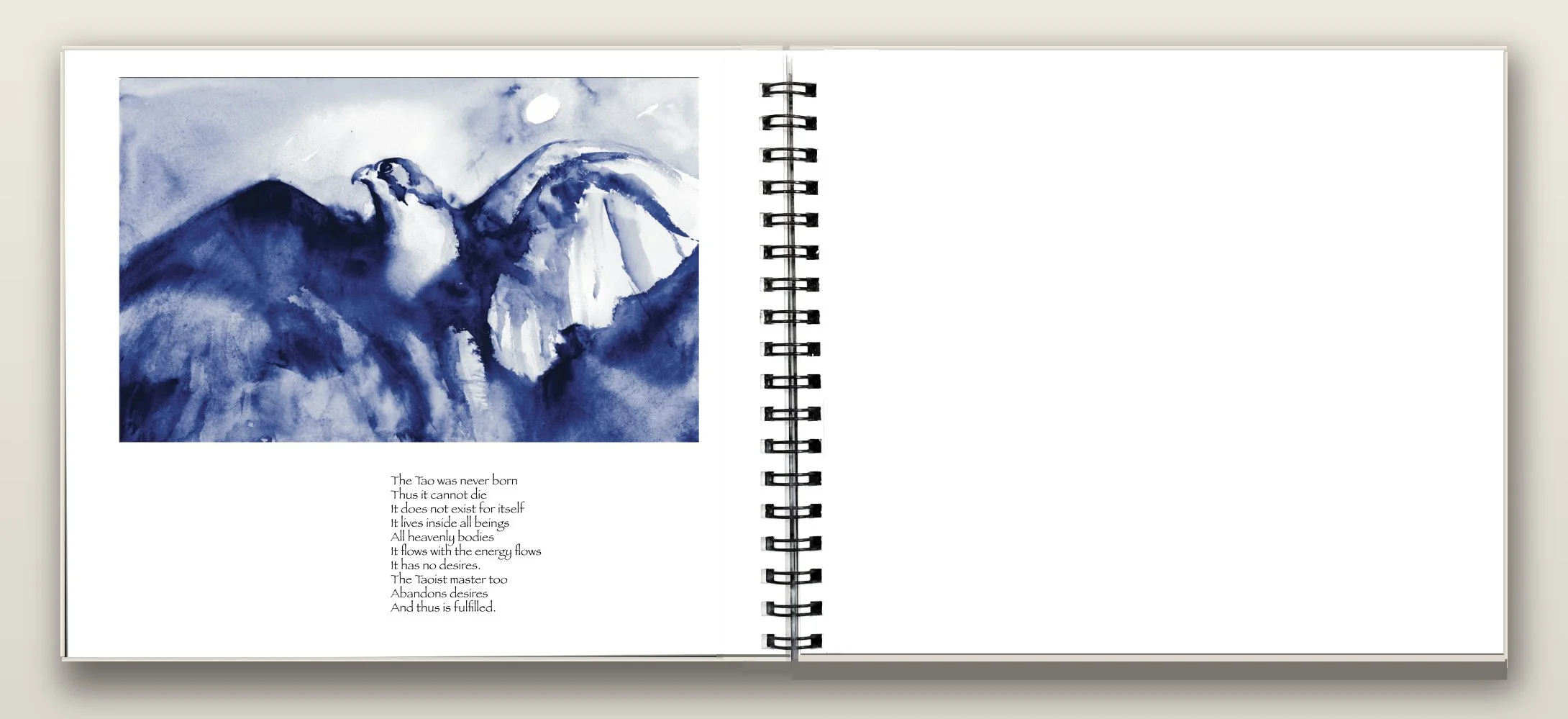
Zen Mountain Journal offers a Taoist journaling practice for those who seek to connect with inner worlds, with the deep silence and peace within. The poems and paintings in these posts are part of a journal now being created by Heron Dance Press. It will be available for preorder shortly.
The Zen Mountain Journal is reader supported but there is no obligation to contribute. If you would be willing to contribute, please do that here.
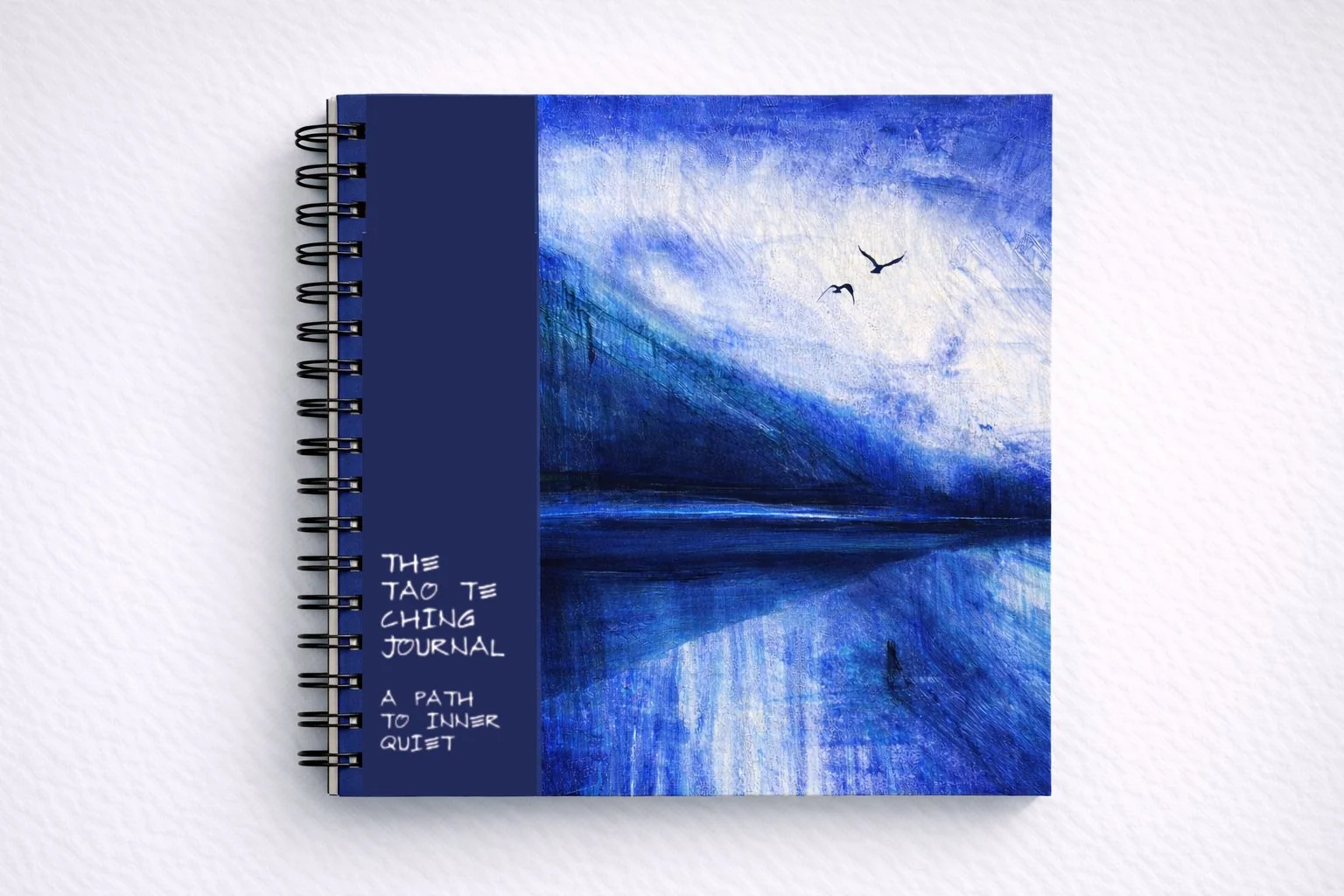

The Tao Te Ching Journal: A Path To Inner Quiet
All pre-orders receive a signed bookplate expressing the author’s appreciation for helping make this Journal possible.
Zen Mountain Journal blends Taoist hermit poetry, contemplative art, and reflections drawn from a lifetime shaped by wilderness, solitude, and decades doing creative work on the outer boundaries of our culture. These journals are companions for seekers — guides in the reconnection with inner quiet, beauty, and the “soundless music” of a life lived with simplicity and meaning.
• Size: 9.25 × 8.5 inches — convenient size for desk or lap.
• Hardcover — the book can be written in without a table or desk.
• Double wire-o bound to lay flat.
• Printed on Mohawk Superfine, a premium uncoated paper for a beautiful writing surface.
• 160 pages.